

Blog
Biotin and Keratin for Hair: Benefits, Uses, and How They Support Stronger-Looking Hair

The weak point to avoid here is repetition: this article should not sound like the earlier “Hair Growth Serum with Biotin and Keratin” blog. I’m writing it as an ingredient education + routine guide, with internal links to the relevant Haironomics pages and related blogs.
Biotin and Keratin for Hair: Benefits, Uses, and How They Support Stronger-Looking Hair
Weak hair, breakage, rough texture, dullness, and hair fall are common concerns for both men and women. When people start looking for hair care products, two ingredients often appear again and again: biotin and keratin for hair.
Both ingredients are popular in shampoos, serums, masks, conditioners, and hair fall care products. However, they do not work in the same way. Biotin is commonly associated with nourishment and stronger-looking hair, while keratin is linked with hair structure, smoothness, and manageability.
Understanding the difference helps you choose better products instead of buying every “hair growth” product without a clear routine.
This guide explains what biotin and keratin are, how they support hair care, when to use biotin and keratin serum or shampoo, and how to build a simple routine for weak, dull, rough, or thinning-looking hair.
You can also explore the Dermvance Pro Haironomics range for hair and scalp care products designed for concern-based routines.
What Is Biotin?
Biotin is also known as Vitamin B7. It is commonly associated with hair, skin, and nail care.
In hair care products, biotin is often used to support the appearance of healthier and stronger-feeling hair. It is commonly found in shampoos, serums, masks, conditioners, and supplements.
When people talk about biotin for hair strength, they usually mean its role in supporting hair care routines for weak, fragile, or dull-looking hair.
However, topical biotin products should not be treated as medical treatment for nutritional deficiency, genetic hair loss, or severe hair fall. If hair fall is sudden, severe, patchy, or persistent, a dermatologist should evaluate the scalp and possible causes.
What Is Keratin?
Keratin is a structural protein naturally found in hair. It helps form the hair fiber and contributes to the strength and structure of the strands.
Hair can start looking rough, weak, frizzy, or damaged when the outer surface of the hair is stressed by heat styling, chemical treatments, harsh brushing, dryness, pollution, or repeated washing.
Hair care products with keratin are commonly used to support smoother-looking, stronger-feeling, and more manageable hair. This is why keratin for hair smoothness is a common focus in shampoos, conditioners, serums, and masks.
Keratin-based products do not permanently rebuild damaged hair, but they may help improve the visible look and feel of the hair when used consistently as part of a routine.
Biotin vs Keratin: What Is the Difference?
Biotin and keratin are both used in hair care, but their roles are different.
Biotin’s Role in Hair Care
Biotin is commonly used in nourishment-focused hair care products. It is often included in formulas designed for weak hair, hair fall care routines, scalp nourishment, and stronger-looking hair.
Biotin-based products may support:
- Hair strength appearance
- Scalp-focused routines
- Root care
- Weak or fragile-looking hair
- Hair fall care routines
- Healthier-feeling hair over time
Biotin is especially common in leave-on serums and hair fall-focused formulas.
Keratin’s Role in Hair Care
Keratin is more closely linked with the structure and surface appearance of the hair strand.
Keratin-based products may support:
- Smoother-looking hair
- Reduced roughness appearance
- Better manageability
- Softer texture
- Stronger-feeling strands
- Frizz-control routines
- Breakage-prone hair care
Keratin is commonly used in products for rough, dry, frizzy, chemically treated, or heat-styled hair.
Why Biotin and Keratin Are Often Used Together
Biotin and keratin are often combined because they support different parts of the hair care routine.
Biotin is associated with nourishment and stronger-looking hair, while keratin supports smoother texture and strand manageability.
Together, they may help users build a more complete routine for weak, dull, rough, breakage-prone, or thinning-looking hair.
This is why many users look for biotin and keratin hair care products such as shampoos, serums, conditioners, masks, and hair fall control combos.
Benefits of Biotin and Keratin for Hair
Biotin and keratin can support several common hair care goals when used correctly.
Supports Stronger-Looking Hair
Weak hair may look flat, dull, fragile, or thin. Biotin is commonly used in products designed to support stronger-looking hair and root-focused routines.
A product with biotin can be useful for people who want to improve the appearance and feel of fragile hair.
Helps Improve Hair Smoothness
Keratin-based formulas may help rough or frizzy hair appear smoother and more polished.
This can be useful for users who struggle with dry hair lengths, tangled strands, or hair that feels difficult to manage after washing.
Supports Hair Fall Care Routines
A hair fall care routine should focus on scalp cleansing, gentle handling, nourishment, and consistency.
Biotin and keratin products may support this routine by helping hair look and feel stronger. However, they cannot guarantee complete hair fall control because hair fall can have many possible causes.
If your main concern is shampoo selection, read Hair Fall Control Shampoo: How to Choose the Right Shampoo for Weak and Thinning Hair.
Helps Reduce the Appearance of Breakage
Hair breakage often happens when the hair strand becomes dry, rough, weak, or damaged. Rough hair is also more likely to tangle, which can increase breakage during combing.
Keratin and conditioning support may help hair feel smoother and easier to detangle, reducing the visible appearance of breakage.
Supports Scalp Nourishment
A scalp nourishment serum may help support root-focused care when applied correctly. A healthy-feeling scalp routine is important because buildup, oil, sweat, and irritation can make hair feel weaker or heavier.
Suitable for Men and Women
Hair care products with biotin and keratin can be used by both men and women when suitable for their hair and scalp type.
Product selection should depend on concern, scalp condition, hair texture, and usage directions rather than gender alone.
Are Biotin and Keratin Good for Hair Fall?
Biotin and keratin may support a hair fall care routine, but they should not be presented as a guaranteed solution for hair fall.
Hair fall can happen due to many reasons, including:
- Stress
- Poor sleep
- Nutritional imbalance
- Hormonal changes
- Post-illness shedding
- Scalp buildup
- Dandruff
- Harsh styling
- Tight hairstyles
- Chemical treatments
- Genetic thinning
- Medical conditions
- Medication-related changes
If hair fall is caused by buildup, dryness, breakage, or weak hair care habits, a better routine may help improve how the hair looks and feels.
If hair fall is internal, hormonal, genetic, or medical, shampoo or serum alone may not be enough.
Biotin and keratin products can support stronger-looking hair, but sudden, severe, patchy, or ongoing hair fall should be checked by a dermatologist.
Biotin and Keratin Serum: When Should You Use It?
A biotin and keratin serum is usually used for more targeted support than shampoo. Since serum is often a leave-on product, it may stay on the scalp, roots, or hair lengths longer than rinse-off products.
A hair serum with biotin and keratin may be useful if your hair looks:
- Weak
- Dull
- Rough
- Fragile
- Breakage-prone
- Thinning-looking
- Dry at the lengths
- In need of scalp nourishment
How you use the serum depends on the product directions. Some serums are designed for the scalp and roots, while others are meant for hair lengths and texture support.
Do not overuse serum. Applying too much product may make the scalp feel greasy or create buildup.
Dermvance Pro offers hair and scalp care products under the Hair Care category. For a deeper guide, read Hair Growth Serum with Biotin and Keratin: How It Supports Stronger-Looking Hair.
Biotin and Keratin Shampoo: When Should You Use It?
A biotin and keratin shampoo is mainly used to cleanse the scalp and hair. Shampoo helps remove sweat, oil, dirt, product buildup, and loose flakes.
Because shampoo is a rinse-off product, expectations should be realistic. It can support a better hair fall care routine, but it cannot remain on the scalp like a leave-on serum.
A strengthening or hair fall-focused shampoo may be useful when:
- Hair feels weak after washing
- The scalp feels oily or heavy
- Product buildup is present
- Hair looks dull or flat
- The routine needs better scalp cleansing
- Hair fall appears connected with poor scalp hygiene
- You want to pair shampoo with serum for a more complete routine
Dermvance Pro’s Haironomics range includes products for hair fall control, scalp care, dandruff care, conditioning, and hair growth support.
Can You Use Biotin and Keratin Products Together?
Yes, biotin and keratin products can usually be used together if they are compatible and used as directed.
A routine may include:
- Shampoo
- Conditioner
- Hair mask
- Serum
- Scalp care product
However, using too many products at once can make the scalp feel oily or overloaded. It can also make it harder to know which product is helping or causing discomfort.
A better approach is to build the routine gradually.
Start with shampoo and one leave-on or conditioning product. Add more only if needed and only if the products work well together.
Simple Hair Care Routine for Weak Hair
A hair care routine for weak hair should focus on scalp cleanliness, strand support, gentle handling, and consistency.
Step 1: Cleanse with a Suitable Shampoo
Start with a shampoo that suits your scalp type.
If your scalp is oily, choose a formula that cleanses buildup without making the hair lengths feel rough. If your scalp is dry or sensitive, avoid harsh washing and very hot water.
Massage shampoo gently into the scalp using fingertips, not nails.
Step 2: Use Conditioner or Hair Mask if Hair Feels Dry
If your hair lengths feel dry, rough, or tangled, use a conditioner or hair mask.
Apply it mainly to the mid-lengths and ends unless the product is specifically labeled for scalp use.
For scalp flakes and dry hair lengths, you can also read Dandruff Control Shampoo and Hair Mask Combo: A Simple Routine for Scalp Care.
Step 3: Apply Biotin and Keratin Serum
Use a serum according to product directions.
If the serum is for scalp care, apply it to the roots or scalp as instructed. If it is for hair smoothness, apply it to the lengths as directed.
Avoid applying excessive product.
Step 4: Reduce Heat and Rough Handling
Weak hair can break more easily when handled roughly.
Avoid:
- Aggressive towel rubbing
- Tight hairstyles
- Frequent straightening
- Excessive blow-drying
- Harsh brushing
- Chemical overload
Step 5: Stay Consistent
Hair care results usually take time. Texture and manageability may improve earlier, while strength-related appearance may require consistent use.
Do not change products too frequently unless irritation occurs.
Biotin and Keratin for Different Hair Concerns
Biotin and keratin can support several common hair concerns, depending on product type and routine.
For Weak Hair
Weak hair may benefit from products that support nourishment, smoothness, and a stronger-looking appearance.
A routine may include shampoo, serum, and conditioning support.
For Rough or Frizzy Hair
Keratin-based products may be useful for rough, frizzy, or difficult-to-manage hair.
Conditioner or mask use is especially helpful for lengths and ends.
For Hair Fall
For hair fall concerns, focus first on scalp cleansing and gentle care.
Biotin and keratin products may support the routine, but persistent or severe hair fall needs professional evaluation.
For Breakage
Breakage often needs conditioning and handling changes.
Use smoother hair care products, reduce heat, avoid harsh brushing, and support the hair lengths with a mask or serum.
For Dull Hair
Dull hair may benefit from hydration, nourishment, and better scalp cleansing.
Avoid heavy buildup because it can make hair look flat and lifeless.
Common Mistakes to Avoid
Expecting Instant Hair Growth
No cosmetic hair care product can guarantee instant hair growth.
Hair growth and hair fall concerns depend on many factors.
Using Too Much Serum
More serum does not mean better results. It may make the scalp oily or create buildup.
Applying Heavy Products to an Oily Scalp
Masks, oils, and heavy creams should not be applied directly to oily roots unless the product says it is suitable for scalp use.
Ignoring Scalp Buildup
Product buildup can make hair feel weak, greasy, flat, or heavy. Cleansing is an important part of the routine.
Skipping Shampoo Routine
A leave-on serum works better when the scalp is clean and not overloaded with residue.
Overusing Heat Styling
Frequent heat exposure can make hair dry, rough, and breakage-prone.
Brushing Wet Hair Aggressively
Wet hair is more fragile. Detangle gently and avoid pulling.
Not Reading Product Directions
Every shampoo, serum, conditioner, or mask has its own usage instructions. Follow the label.
Treating Cosmetic Products as Medical Treatment
Hair care products can support appearance and routine, but they do not replace medical care.
Ignoring Sudden or Severe Hair Fall
Sudden, patchy, painful, or severe hair fall should not be ignored.
How Long Does It Take to See Results?
Results vary from person to person.
Some people may notice smoother texture, better manageability, or softer hair earlier. Strength-related appearance and hair fall care support may take longer and depend on consistent use.
Results can depend on:
- Hair type
- Scalp condition
- Product formula
- Application frequency
- Heat styling habits
- Diet and lifestyle
- Underlying hair fall causes
- Consistency
No product can guarantee a fixed timeline.
If hair fall continues despite routine care, professional guidance is more appropriate than repeatedly changing products.
When Should You Consult a Dermatologist?
Consult a dermatologist if you notice:
- Sudden hair fall
- Patchy hair loss
- Severe shedding
- Visible thinning
- Scalp pain
- Itching, redness, sores, or infection
- Hair fall after illness
- Hair fall after medication changes
- Hair fall after childbirth
- Hair fall linked with hormonal concerns
- Hair fall that does not improve with routine care
A dermatologist can evaluate the scalp and identify possible causes. This is especially important when the issue is not just breakage but true shedding from the root.
Why Choose Dermvance Pro Haironomics Products?
Dermvance Pro offers concern-based skin, hair, and scalp care products. Its Haironomics range focuses on hair fall control, hair growth support, scalp care, dandruff care, conditioning, and hair repair routines.
The Haironomics category includes products and combinations that can help users build a structured hair care routine instead of choosing unrelated products randomly.
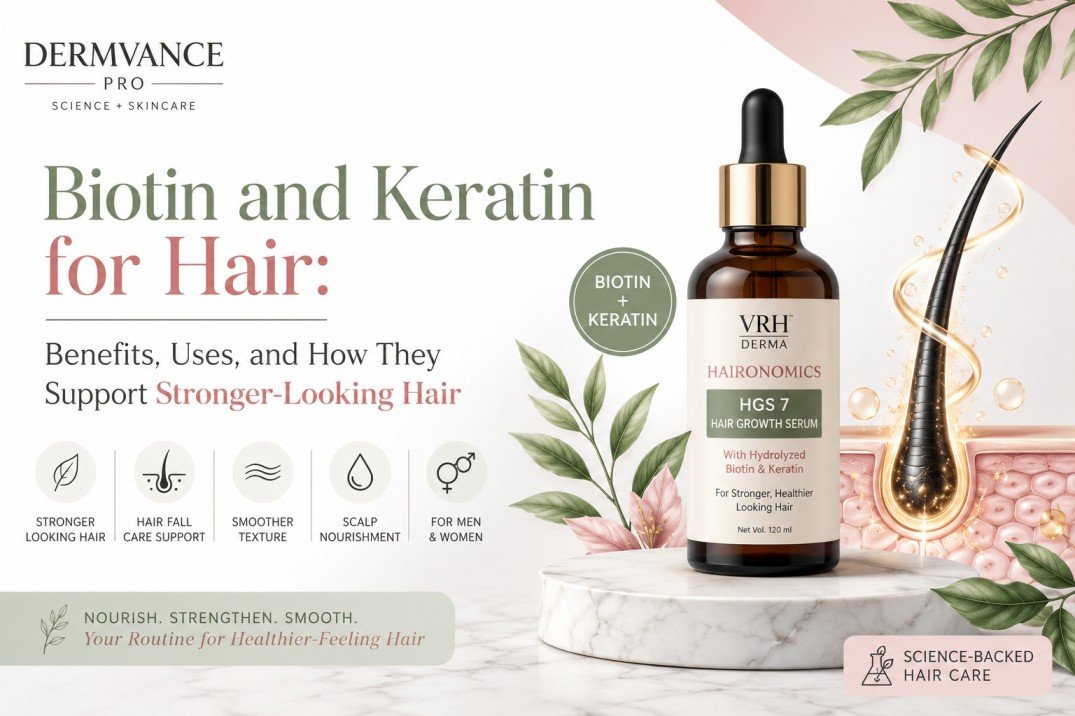
One relevant option is the VRH Derma Hairnomics Hair Growth Combo, which combines HCS 5 Shampoo and HGS 7 Hair Serum for users looking for shampoo and serum support in one hair fall and scalp health routine.
Dermvance Pro hair care products may be useful for users looking to build a simple routine with:
- Shampoo
- Serum
- Hair mask
- Scalp support
- Hair fall care products
- Strength and smoothness support
Explore the full Hair Care category to compare available hair and scalp care options.
Frequently Asked Questions
Is biotin good for hair?
Biotin is commonly associated with hair strength and nourishment. In topical hair care products, it may support stronger-looking and healthier-feeling hair as part of a regular routine.
Is keratin good for hair?
Keratin-based hair care products may support smoother, stronger-looking, and more manageable hair. They are commonly used for rough, frizzy, dry, or breakage-prone hair.
Can biotin and keratin be used together?
Yes. Many hair care products combine biotin and keratin because they support different routine goals. Biotin is linked with nourishment, while keratin supports hair texture and smoothness.
Does biotin and keratin stop hair fall?
Biotin and keratin may support a hair fall care routine, but they cannot guarantee complete control of hair fall. Hair fall can have many internal, external, and medical causes.
Is biotin and keratin serum good for weak hair?
A biotin and keratin serum may support stronger-looking hair, scalp nourishment, and better manageability when used as directed.
Can men and women use biotin and keratin hair products?
Yes. Product selection should depend on hair type, scalp condition, concern, and product directions rather than gender.
Should I use biotin and keratin shampoo or serum?
Shampoo helps cleanse the scalp and hair. Serum provides targeted leave-on support. Many routines can include both if the products are suitable and used as directed.
Can keratin reduce frizz?
Keratin-based products may help hair appear smoother and more manageable, which can reduce the appearance of frizz.
How often should I use biotin and keratin products?
Follow the product label. Frequency depends on product type, scalp condition, hair needs, and tolerance.
Where can I buy Dermvance Pro biotin and keratin hair products?
You can explore biotin and keratin hair care products through the official Dermvance Pro website, Hair Care category, and Haironomics range.
Conclusion
Biotin and keratin support different but complementary parts of a hair care routine.
Biotin is commonly associated with nourishment and stronger-looking hair, while keratin supports smoother texture, manageability, and better-looking hair strands. Together, they may be useful for people dealing with weak, rough, dull, breakage-prone, or thinning-looking hair.
However, expectations must be realistic. Biotin and keratin hair care products can support appearance and routine, but they cannot cure every type of hair fall or replace professional advice for severe concerns.
A complete routine may include shampoo, serum, conditioning support, gentle hair handling, scalp care, and consistent use.
Explore Dermvance Pro Haironomics products and build a simple biotin-and-keratin routine for stronger-looking, healthier-feeling hair.

