


Blog
Azelaic Acid and Niacinamide for Acne Marks

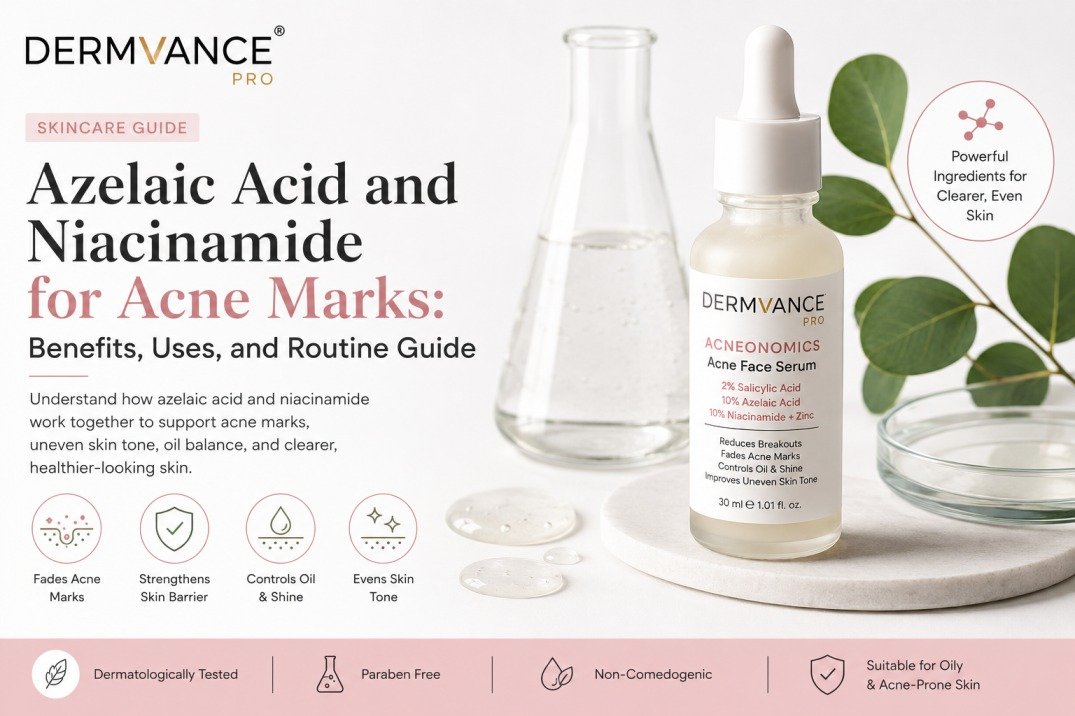
Acne-prone skin does not always return to a clear and even-looking appearance immediately after breakouts heal. Many people notice visible marks, uneven tone, dark spots, redness, or dullness even after active acne has reduced.
This is where ingredients like azelaic acid and niacinamide for acne marks become important in skincare routines.
Azelaic acid and niacinamide are commonly used in products designed for acne-prone skin, uneven-looking tone, oil balance, post-acne marks, and skin comfort. They work differently, but they can support each other well when used in a balanced routine.
Azelaic acid is often used for acne-prone and uneven-looking skin, while niacinamide is popular for oil balance, skin barrier support, and tone improvement. Together, they can be useful for people dealing with post-acne marks, oily skin, and dull or uneven-looking complexion.
This guide explains what acne marks are, how azelaic acid and niacinamide support acne-prone skin, how to use them in a routine, what mistakes to avoid, and why sunscreen is essential when working on acne marks.
You can also read Acne Care Products for Oily Skin: How to Build a Simple Routine for a broader acne-prone skincare routine.
What Are Acne Marks?
Acne marks are visible spots or discoloration left behind after a breakout heals. They may appear as brown spots, red marks, dark patches, or uneven-looking areas on the skin.
Acne marks are different from active pimples. Active acne may include whiteheads, blackheads, inflamed bumps, pustules, or painful cystic acne. Acne marks are the leftover visible signs after the breakout has settled.
Common types of post-acne marks include:
- Brown marks
- Dark spots
- Red marks
- Uneven-looking tone
- Patchy discoloration
- Post-acne dullness
- Rough-looking texture around old breakout areas
Acne marks can be frustrating because they may stay visible even when breakouts are no longer active.
A good post acne marks skincare routine should focus on gentle cleansing, targeted serum, moisturizer, sunscreen, and consistency.
Acne Marks vs Acne Scars vs Dark Spots
Before choosing a skincare product, it is important to understand the difference between acne marks, acne scars, and dark spots.
Acne Marks
Acne marks usually refer to discoloration left after breakouts. They can look brown, red, or dark depending on your skin tone and the type of inflammation.
These marks may improve in appearance over time with consistent skincare and sunscreen.
Acne Scars
Acne scars are changes in skin texture. They may appear as pits, dents, raised areas, or uneven skin surface.
Skincare products may support skin texture appearance, but deeper acne scars often need dermatologist-led treatments.
Dark Spots
Dark spots are areas of the skin that look darker than the surrounding skin. They may be caused by sun exposure, post-acne marks, irritation, or other pigmentation concerns.
If your main concern is dark spots and uneven tone, you can also read Dark Spots and Uneven Skin Tone: How to Build a Brightening Skincare Routine.
Why Do Acne Marks Happen?
Acne marks usually appear after inflammation. When the skin experiences a breakout, the healing process may leave behind discoloration.
Several factors can make acne marks more noticeable:
- Picking or squeezing pimples
- Sun exposure
- Inflammation
- Repeated breakouts in the same area
- Harsh scrubbing
- Irritating skincare products
- Delayed acne care
- Lack of sunscreen
- Skin tone and natural pigmentation response
- Overuse of exfoliating products
One of the biggest mistakes is picking acne. Squeezing pimples can increase irritation and may make marks look darker or last longer.
A good acne routine should calm the skin, reduce unnecessary irritation, and support a more even-looking complexion.
What Is Azelaic Acid?
Azelaic acid is a skincare ingredient commonly used in products for acne-prone skin, uneven-looking tone, redness-prone appearance, and post-acne marks.
It is often included in serums, creams, gels, and targeted skincare products.
In simple terms, azelaic acid for acne marks may help support a clearer and more even-looking complexion when used consistently as part of a routine.
Azelaic acid is commonly used for:
- Acne-prone skin support
- Post-acne mark routines
- Uneven-looking tone
- Redness-prone appearance
- Dull-looking skin
- Blemish-prone skin
- Oily skin routines
It should still be used carefully, especially if your skin is sensitive or if your routine already includes other active ingredients.
What Is Niacinamide?
Niacinamide is a form of Vitamin B3. It is one of the most popular skincare ingredients because it is used across many skin concerns.
Niacinamide for acne marks is commonly discussed because it supports skin barrier comfort, oil balance, uneven-looking tone, and smoother-looking skin.
Niacinamide is often found in:
- Serums
- Moisturizers
- Acne products
- Brightening products
- Barrier-support formulas
- Oil-control products
- Sensitive skin products
Niacinamide may be useful for acne-prone skin because a good acne routine should not only focus on drying breakouts. It should also support comfort, hydration, and barrier health.
Azelaic Acid vs Niacinamide: What Is the Difference?
Azelaic acid and niacinamide are both useful in acne-prone skincare, but they are not the same ingredient.
Azelaic Acid’s Role
Azelaic acid is often used in products focused on acne-prone skin, blemishes, redness-prone appearance, and uneven-looking tone.
It may support routines for:
- Post-acne marks
- Breakout-prone skin
- Uneven-looking skin tone
- Blemish-prone areas
- Dark spot appearance
- Skin clarity
Niacinamide’s Role
Niacinamide is widely used for skin comfort, barrier support, and oil balance.
It may support routines for:
- Oily skin
- Uneven tone
- Post-acne marks
- Skin barrier comfort
- Dullness
- Redness-prone appearance
- Sensitive acne-prone skin
Why They Work Well Together
Azelaic acid and niacinamide are often used together because they support different but connected skin goals.
Azelaic acid supports acne-prone and uneven-looking skin routines, while niacinamide supports oil balance, barrier comfort, and overall tone.
Together, they can be useful in a routine for people dealing with acne marks, oily skin, dullness, and uneven-looking complexion.
Benefits of Azelaic Acid and Niacinamide for Acne Marks
A routine with azelaic acid and niacinamide may support acne-prone skin in several ways.
Supports More Even-Looking Skin Tone
Post-acne marks can make the skin look patchy or uneven. Azelaic acid and niacinamide are commonly used in routines for more even-looking skin tone.
They may support the visible appearance of smoother and clearer-looking skin over time.
Helps Improve the Appearance of Acne Marks
An acne marks serum with ingredients like azelaic acid and niacinamide may help support the appearance of post-acne discoloration.
However, results vary. Severe marks, deep scars, or persistent pigmentation may need dermatologist support.
Supports Oily Skin Balance
Niacinamide is commonly used in oily skin routines because it supports oil balance and skin comfort.
This can be helpful for acne-prone skin that feels greasy but still becomes irritated or dehydrated.
Supports Skin Barrier Comfort
A weak or irritated skin barrier can make acne-prone skin feel more sensitive. Niacinamide is commonly used in barrier-support routines.
This is important because harsh acne routines can sometimes make the skin feel dry, tight, or uncomfortable.
Supports Breakout-Prone Skin Routines
Azelaic acid is commonly used in acne-prone skincare. When paired with niacinamide, it can support a more balanced routine for breakouts and post-acne marks.
Helps Reduce the Appearance of Dullness
Acne-prone skin can look dull because of marks, oiliness, buildup, or irritation. A balanced routine can help the skin look fresher and more refined.
Suitable for Men and Women
An acne serum for men and women should be selected based on skin type, concern, and tolerance rather than gender.
Both men and women can use azelaic acid and niacinamide products if they suit the skin and are used as directed.
Is Azelaic Acid Good for Acne Marks?
Azelaic acid is commonly used in routines for acne marks and uneven-looking tone. It may support clearer-looking skin and help improve the appearance of post-acne discoloration over time.
It can be especially useful when acne marks are linked with blemish-prone skin, uneven-looking tone, and repeated breakouts.
However, azelaic acid should not be treated as a guaranteed solution for all pigmentation or acne scars. Deeper scars, severe acne, or long-lasting dark patches may need dermatologist care.
Is Niacinamide Good for Acne Marks?
Niacinamide can be useful for acne marks because it supports barrier comfort, oil balance, and uneven-looking tone.
A damaged or irritated skin barrier can make acne-prone skin harder to manage. Niacinamide may help support a more balanced routine, especially when acne products feel drying.
Niacinamide may also support the appearance of smoother and more even-looking skin when used consistently.
Azelaic Acid and Niacinamide Serum: When Should You Use It?
An azelaic acid and niacinamide serum may be useful if you are dealing with acne marks, uneven-looking tone, oily skin, or post-breakout dullness.
A serum is usually a leave-on product, which means it stays on the skin longer than a cleanser.
A serum may be suitable for:
- Post-acne marks
- Uneven-looking tone
- Oily acne-prone skin
- Dull skin after breakouts
- Blemish-prone skin
- Skin that needs targeted support
- Acne marks and dark spots
- Skin barrier and tone support
Dermvance Pro’s Acneonomics range includes acne-focused products, including serum options designed for oily and acne-prone skin routines.
You can explore the Acneonomics category for acne cleanser, acne serum, and targeted care products.
Salicylic Acid, Azelaic Acid, Niacinamide, and Zinc: Why This Combination Matters
Some acne-prone skincare products combine multiple ingredients to support different parts of the routine.
A salicylic acid azelaic acid niacinamide serum may support acne-prone skin from different angles.
Salicylic Acid
Salicylic acid is commonly used in oily and clogged-pore routines. It supports cleansing and exfoliation-focused care for breakout-prone skin.
For more guidance, read Salicylic Acid Face Wash for Acne-Prone Skin: Benefits, Uses, and What to Look For.
Azelaic Acid
Azelaic acid supports acne-prone and uneven-looking skin routines. It is useful when acne marks and blemish-prone skin are key concerns.
Niacinamide
Niacinamide supports barrier comfort, oil balance, and uneven-looking tone.
Zinc
Zinc is commonly used in acne-prone skincare products and is often included in formulas focused on oil balance and skin comfort.
Together, these ingredients can support a structured routine for people dealing with active breakouts, oily skin, acne marks, and uneven-looking tone.
Skincare Routine for Acne Marks
A skincare routine for acne marks should be simple, consistent, and gentle. Overloading the skin with too many strong products can make marks look worse by increasing irritation.
A good routine should include:
- Gentle cleanser
- Targeted serum
- Moisturizer
- Sunscreen
Morning Routine for Acne Marks
A morning routine should focus on cleansing, hydration, targeted support, and sun protection.
Step 1: Cleanse
Use a gentle cleanser or acne-focused cleanser depending on your skin type and tolerance.
If your skin is oily and breakout-prone, you may use a suitable salicylic acid face wash if the product directions allow.
Step 2: Apply Acne Marks Serum
Use an acne serum with ingredients like azelaic acid, niacinamide, salicylic acid, or zinc if suitable for your skin.
Apply only the recommended amount and avoid layering too many active products.
Step 3: Moisturize
Moisturizer helps support skin comfort and barrier function.
Even oily skin may need a lightweight moisturizer.
Read Best Moisturizer for Dry and Dull Skin to understand why moisturizer is important in active skincare routines.
Step 4: Apply Sunscreen
Sunscreen is essential for acne marks. Without sunscreen, post-acne marks and uneven tone may appear more noticeable.
Use broad-spectrum sunscreen in the morning and reapply when needed.
You can read Broad-Spectrum SPF 50 Sunscreen for All Skin Types for sunscreen guidance.
Night Routine for Acne Marks
A night routine should focus on cleansing, targeted care, and skin comfort.
Step 1: Remove Sunscreen or Makeup
If you wear sunscreen or makeup, remove it properly before cleansing.
Step 2: Cleanse
Use a gentle cleanser or acne-focused cleanser based on your skin tolerance.
Avoid harsh scrubbing.
Step 3: Apply Targeted Serum
Apply your acne marks serum as directed.
If your serum contains multiple active ingredients, do not combine it with too many other active products in the same routine.
Step 4: Moisturize
Finish with moisturizer to support hydration and comfort overnight.
A simple night routine may look like this:
Cleanser → Acne marks serum → Moisturizer
Why Sunscreen Is Essential for Acne Marks
Sunscreen is one of the most important steps in any acne marks routine.
Post-acne marks can look darker or more noticeable after sun exposure. Even if you use the best serum for acne marks, skipping sunscreen may slow visible improvement.
Sunscreen helps support:
- More even-looking tone
- Post-acne mark routines
- Dark spot care
- Skin protection
- Active ingredient routines
- Long-term skin appearance
If you prefer lightweight textures, read Non-Greasy SPF 50 Sunscreen for Face.
Can You Use Azelaic Acid and Niacinamide Together?
Yes, azelaic acid and niacinamide can usually be used together if the product is formulated that way or if your skin tolerates both ingredients.
Many skincare routines combine them because they support different goals.
However, if you are using separate products, introduce them slowly. Do not start multiple new actives at the same time.
If your skin becomes dry, red, itchy, or irritated, reduce frequency or stop use.
Can You Use Azelaic Acid and Niacinamide with Salicylic Acid?
Yes, many acne routines include salicylic acid, azelaic acid, and niacinamide, but they should be used carefully.
Salicylic acid can be useful for oily and clogged-pore routines. Azelaic acid supports acne-prone and uneven-looking skin. Niacinamide supports barrier comfort and oil balance.
However, using too many active products can irritate the skin.
If your cleanser contains salicylic acid and your serum contains azelaic acid and niacinamide, start slowly and moisturize well.
Can You Use Azelaic Acid and Niacinamide with Vitamin C?
Some users can use these ingredients in the same overall routine, but sensitive skin may need separation.
A simple approach may be:
- Vitamin C in the morning on selected days
- Azelaic acid and niacinamide serum at night
- Moisturizer as needed
- Sunscreen every morning
If your skin feels irritated, simplify the routine.
For Vitamin C guidance, read Vitamin C Serum for Dull and Uneven Skin.
Can You Use Azelaic Acid and Niacinamide with Glycolic Acid?
Use caution.
Glycolic acid is an exfoliating acid. If you combine it too often with acne serums or other active ingredients, the skin may become dry or irritated.
A safer routine may be:
- Acne marks serum on most routine nights if tolerated
- Glycolic acid only on selected nights
- Moisturizer after active products
- Sunscreen every morning
For more details, read Glycolic Acid for Dull and Uneven Skin.
Common Mistakes to Avoid
Picking or Squeezing Pimples
Picking can increase irritation and make acne marks more noticeable.
Skipping Sunscreen
Sunscreen is essential for post-acne marks and uneven-looking tone.
Using Too Many Actives
More active ingredients do not always mean faster results. Overuse can irritate the skin.
Over-Cleansing
Washing too often can make acne-prone skin dry, tight, and irritated.
Skipping Moisturizer
Moisturizer helps support skin comfort and barrier health, especially when using acne serums.
Expecting Overnight Results
Acne marks usually need consistent care over time.
Treating Scars and Marks the Same Way
Marks are discoloration. Scars are texture changes. Deeper scars may require professional treatment.
Changing Products Too Frequently
Frequent changes make it hard to know what is helping or irritating the skin.
Applying Serum Only on Marks but Ignoring Routine
Serum is important, but cleanser, moisturizer, and sunscreen also matter.
Ignoring Severe Acne
If acne is painful, cystic, or scarring, skincare alone may not be enough.
How Long Does It Take to Improve Acne Marks?
Results vary from person to person.
Some users may notice better skin comfort, less oiliness, or smoother-looking skin earlier. Visible acne marks and uneven tone may take longer.
Improvement depends on:
- Skin type
- Skin tone
- Type of acne marks
- Sun exposure
- Sunscreen use
- Product formula
- Consistency
- Acne severity
- Picking habits
- Skin sensitivity
- Overall routine
No skincare product can guarantee a fixed timeline.
If marks are not improving or acne continues, consult a dermatologist.
When Should You See a Dermatologist?
A dermatologist should evaluate your skin if you have:
- Painful acne
- Cystic acne
- Deep acne scars
- Severe inflammation
- Sudden acne flare
- Acne that does not improve
- Pigmentation that spreads quickly
- Dark spots that change shape or color
- Skin burning or peeling from products
- Signs of infection
- Acne marks causing major concern
- Persistent redness or irritation
Professional treatments may be needed for deeper scars, severe acne, or stubborn pigmentation.
Why Choose Dermvance Pro Acneonomics Products?
Dermvance Pro offers concern-based skincare products for acne-prone skin, hydration, brightening, exfoliation, sunscreen care, and daily skin support.
For acne-prone skin and acne marks, the Acneonomics category is the most relevant product range.
Dermvance Pro’s acne-focused products include:
- Acne cleanser
- Acne face serum
- Targeted acne repair gel
- Oil and breakout-focused products
- Products for acne-prone skincare routines
Dermvance Pro’s Acne Face Serum includes salicylic acid, azelaic acid, niacinamide, and zinc, making it relevant for users looking for a serum for acne marks, oily skin, and uneven-looking tone.
A simple Dermvance Pro acne marks routine may include:
- Acne-focused or gentle cleanser
- Acne face serum
- Lightweight moisturizer
- Broad-spectrum sunscreen
You can explore the complete Skin Care category to build a routine based on your skin concern.
Frequently Asked Questions
Is azelaic acid good for acne marks?
Azelaic acid is commonly used in routines for acne-prone skin, post-acne marks, and uneven-looking tone. It may support a clearer and more even-looking complexion when used consistently.
Is niacinamide good for acne marks?
Yes, niacinamide may support acne marks routines by helping with oil balance, barrier comfort, and uneven-looking tone.
Can I use azelaic acid and niacinamide together?
Yes, azelaic acid and niacinamide can usually be used together if your skin tolerates them or if they are included in the same formulated product.
What is the best serum for acne marks?
A good serum for acne marks may include ingredients like azelaic acid, niacinamide, salicylic acid, or zinc. Choose based on your skin type and routine needs.
Does azelaic acid remove acne scars?
Azelaic acid may support the appearance of acne marks and uneven tone, but deep acne scars usually need dermatologist-led treatment.
Can niacinamide help oily acne-prone skin?
Yes, niacinamide is commonly used in oily skin routines because it supports oil balance and skin comfort.
Can I use salicylic acid with azelaic acid and niacinamide?
Yes, but use carefully. Too many active products may irritate the skin. Start slowly and moisturize well.
Should I use sunscreen for acne marks?
Yes. Sunscreen is essential because sun exposure can make acne marks and dark spots look more noticeable.
Can men use acne marks serum?
Yes. Acne marks serum can be used by men and women if it suits the skin type and is used as directed.
Where can I buy Dermvance Pro acne products?
You can explore Dermvance Pro acne products on the official Dermvance Pro website and the Acneonomics category.
Conclusion
Azelaic acid and niacinamide for acne marks can be a useful combination in routines for post-acne discoloration, oily skin, uneven-looking tone, and acne-prone skin comfort.
Azelaic acid supports acne-prone and uneven-looking skin routines, while niacinamide supports oil balance, barrier comfort, and smoother-looking tone. When used correctly, they can help support a more balanced acne marks routine.
However, skincare should be realistic. Acne marks take time, and deeper scars or severe acne may need professional treatment.
A simple routine with cleanser, acne marks serum, moisturizer, and sunscreen is often better than using too many active products at once.
Explore Dermvance Pro Acneonomics products to build a balanced skincare routine for acne-prone skin and post-acne marks.

