

Blog
Glycolic Acid for Dull and Uneven Skin: Benefits, Uses, and How to Use It Safely

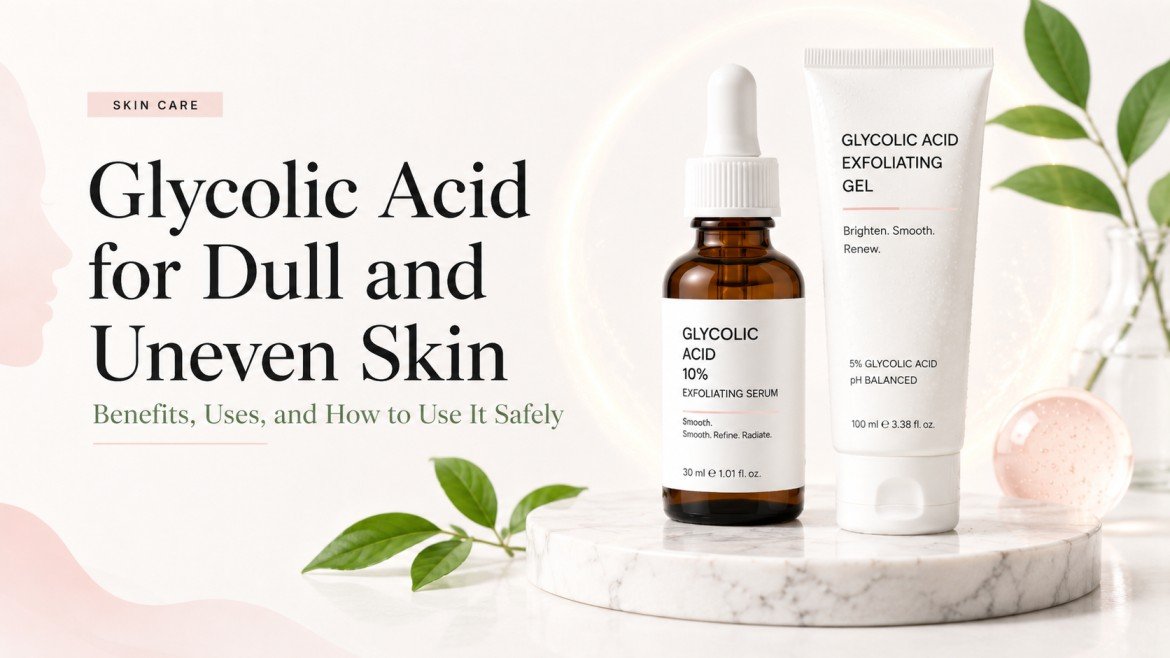
Dull skin, rough texture, uneven tone, and tired-looking complexion are common skincare concerns. Many people try brightening serums, moisturizers, or face washes, but sometimes the missing step in the routine is gentle exfoliation.
This is where glycolic acid for dull and uneven skin becomes an important topic.
Glycolic acid is a popular skincare ingredient used in exfoliating products for smoother-looking, brighter-looking, and more refined skin texture. It can help remove buildup from the surface of the skin, support radiance, and improve the appearance of dullness when used correctly.
However, glycolic acid must be used carefully. Overuse can cause dryness, irritation, redness, or sensitivity. It should always be paired with proper hydration and sunscreen.
This guide explains what glycolic acid is, how it supports dull and uneven-looking skin, who should use it carefully, how often to use it, what mistakes to avoid, and how to add it to a simple skincare routine.
You can also explore Dermvance Pro Skin Care products for concern-based skincare options.
What Is Glycolic Acid?
Glycolic acid is an alpha hydroxy acid, commonly called an AHA. It is widely used in skincare products designed for exfoliation, dullness, rough texture, uneven-looking tone, and radiance support.
Among AHAs, glycolic acid is well known because of its small molecular size. This allows it to work effectively on the surface of the skin.
In simple terms, glycolic acid helps loosen dead skin cell buildup from the skin’s surface. When this buildup is removed gradually, the skin may look smoother, fresher, and more radiant.
Glycolic acid is commonly found in:
- Face gels
- Exfoliating gels
- Toners
- Serums
- Creams
- Peels
- Dermatology-inspired skincare products
A glycolic acid gel for skin is usually used as a targeted skincare product, not as a basic cleanser or moisturizer.
Why Does Skin Look Dull and Uneven?
Dull and uneven-looking skin can happen for many reasons. Sometimes it is caused by pigmentation, but in many cases, it is also linked with texture, dryness, buildup, and poor routine consistency.
Common causes include:
- Dead skin buildup
- Sun exposure
- Dehydration
- Rough skin texture
- Post-acne marks
- Pollution exposure
- Harsh cleansing
- Lack of sunscreen
- Inconsistent skincare routine
- Product buildup
- Dry patches
- Uneven exfoliation
When dead skin cells collect on the surface, the skin may look flat, tired, or rough. Makeup may not sit smoothly, serums may not feel as effective, and the face may lack a healthy-looking glow.
For cleanser-focused guidance, you can also read Hydrating Face Wash for Dull Skin: What to Look for Before Buying.
How Glycolic Acid Helps Dull and Uneven-Looking Skin
Glycolic acid supports dull and uneven-looking skin mainly through exfoliation.
Exfoliation means removing dead skin buildup from the surface. When done correctly, it can help improve the look of skin texture and radiance.
Helps Remove Dead Skin Buildup
Dead skin buildup can make the face look dull, tired, and rough.
Glycolic acid helps loosen this buildup so the skin surface looks fresher and smoother.
Supports Brighter-Looking Skin
When dull surface buildup is reduced, the skin may reflect light better. This can make the complexion appear brighter and more refreshed.
This is why many users search for glycolic acid for glowing skin.
Improves the Appearance of Rough Texture
Uneven texture can make skin look older, tired, or less polished. Glycolic acid may help support smoother-looking skin when used consistently and carefully.
Supports Uneven Tone Routines
A routine with glycolic acid may help improve the appearance of uneven-looking tone over time, especially when paired with sunscreen and brightening products.
For a broader routine, read Dark Spots and Uneven Skin Tone: How to Build a Brightening Skincare Routine.
Helps Skincare Products Apply More Smoothly
When surface buildup is reduced, other skincare products may apply more evenly. Moisturizer, serum, and sunscreen may feel smoother on the skin.
Glycolic Acid for Dark Spots: What to Know
Many people search for glycolic acid for dark spots, but expectations should be realistic.
Glycolic acid may support the appearance of more even-looking skin by exfoliating surface buildup and improving texture. It may also support routines focused on post-acne marks, dullness, and uneven tone.
However, dark spots can have different causes, including sun exposure, post-acne marks, hormonal pigmentation, melasma, inflammation, or other skin conditions.
Glycolic acid should not be treated as a guaranteed solution for pigmentation. If dark spots are severe, spreading, changing quickly, or not improving, it is better to consult a dermatologist.
For brightening support, glycolic acid may work well as part of a routine that includes:
- Gentle cleanser
- Brightening serum
- Moisturizer
- Broad-spectrum sunscreen
- Controlled exfoliation
You can also read Vitamin C Serum for Dull and Uneven Skin to understand how Vitamin C fits into a brightening routine.
Glycolic Acid for Uneven Skin Tone
Uneven skin tone may appear as patchiness, dullness, post-acne marks, sun-related discoloration, or rough-looking texture.
Glycolic acid for uneven skin tone may help when unevenness is partly caused by surface buildup, rough texture, or dullness.
It supports the routine by:
- Exfoliating dead skin buildup
- Improving surface smoothness
- Supporting radiance
- Helping skin look more refined
- Making the complexion appear fresher
But sunscreen is essential. Without sunscreen, uneven tone may become more noticeable because UV exposure can worsen the appearance of dark spots and discoloration.
Benefits of Glycolic Acid for Face
Glycolic acid can be useful in skincare routines when used properly.
1. Supports Gentle Exfoliation
Glycolic acid helps exfoliate the skin surface without physical scrubbing. This can be useful for people who want smoother-looking skin but do not want harsh scrubs.
2. Helps Improve Dullness
Dullness is often linked with buildup and uneven surface texture. Glycolic acid may help the skin look brighter and fresher over time.
3. Supports Smoother Texture
If the skin feels rough or uneven, glycolic acid may help improve the appearance of surface texture.
4. Helps with Post-Acne Mark Appearance
Post-acne marks may look more visible when the skin surface is dull or rough. Glycolic acid may support a routine for improving the appearance of post-acne marks.
For acne-prone skin, read Acne Care Products for Oily Skin: How to Build a Simple Routine.
5. Supports Radiance
By helping remove surface buildup, glycolic acid may support a healthier-looking glow.
6. Helps Skincare Layer Better
Smooth skin texture can help serums, moisturizers, and sunscreen apply more evenly.
Who Can Use Glycolic Acid?
Glycolic acid may be suitable for people dealing with:
- Dull-looking skin
- Rough skin texture
- Uneven-looking tone
- Dry patches
- Post-acne marks
- Tired-looking complexion
- Lack of glow
- Buildup-prone skin
- Textured skin
However, not every skin type can tolerate glycolic acid in the same way.
Who Should Use Glycolic Acid Carefully?
Glycolic acid should be introduced carefully if you have:
- Sensitive skin
- Very dry skin
- Active irritation
- Damaged skin barrier
- Redness
- Burning sensation
- Peeling
- Active acne inflammation
- Eczema-prone skin
- Rosacea-prone skin
- Recent cosmetic procedures
- Recent sunburn
- Use of prescription retinoids or strong actives
If your skin is already irritated, do not start glycolic acid until the skin feels calm.
Pregnant or breastfeeding users, or anyone using prescription skincare, should ask a dermatologist before adding exfoliating acids.
How to Use Glycolic Acid Safely
Using glycolic acid safely is more important than using it frequently.
Step 1: Start Slowly
Do not use glycolic acid every day in the beginning.
Start with one to two times a week, depending on the product directions and your skin tolerance.
Step 2: Use at Night
Glycolic acid is often better used at night because it can make the skin more sensitive to the sun.
Step 3: Apply on Clean, Dry Skin
After cleansing, pat the skin dry before applying glycolic acid.
Applying it on wet skin may increase irritation for some users.
Step 4: Use a Small Amount
More product does not mean better results. Use only the amount recommended on the product label.
Step 5: Avoid the Eye Area
Do not apply glycolic acid too close to the eyes, corners of the nose, or lips unless the product specifically allows it.
Step 6: Follow with Moisturizer
Moisturizer helps support skin comfort after exfoliation.
Step 7: Use Sunscreen Daily
This step is mandatory. Glycolic acid can increase sun sensitivity, so sunscreen should be used every morning.
Read Broad-Spectrum SPF 50 Sunscreen for All Skin Types for sunscreen selection guidance.
How Often Should You Use Glycolic Acid?
Frequency depends on your skin type, product strength, and tolerance.
A general approach may look like this:
Beginners
Use once or twice a week at night.
Normal or Combination Skin
Use two to three times weekly if tolerated and if the product directions allow.
Oily Skin
Some oily skin types may tolerate glycolic acid better, but overuse can still cause irritation.
Dry or Sensitive Skin
Use less frequently and focus on moisturizer. If irritation occurs, stop use.
Mature or Rough-Textured Skin
Use gradually and consistently rather than aggressively.
Never assume that daily use is better. Over-exfoliation can damage the skin barrier and make dullness worse.
Morning Routine When Using Glycolic Acid
If you use glycolic acid at night, your morning routine should focus on hydration and protection.
A simple morning routine can be:
Gentle face wash → Hydrating or brightening serum → Moisturizer → Sunscreen
Morning routine steps:
- Cleanse gently
- Apply hydrating or brightening serum if suitable
- Use moisturizer
- Apply broad-spectrum sunscreen
If you prefer lightweight sunscreen textures, read Non-Greasy SPF 50 Sunscreen for Face.
Night Routine with Glycolic Acid
A glycolic acid night routine should be simple.
Cleanser → Glycolic acid product → Moisturizer
Step 1: Cleanse
Use a gentle cleanser to remove dirt, oil, sunscreen, and buildup.
Step 2: Apply Glycolic Acid
Use the glycolic acid gel or product as directed. Avoid over-applying.
Step 3: Moisturize
Apply moisturizer to support comfort and hydration.
Avoid adding too many active products on the same night.
Can You Use Glycolic Acid with Vitamin C?
Glycolic acid and Vitamin C are both used in brightening routines, but they may be irritating when used together, especially for beginners.
A safer approach is:
- Use Vitamin C in the morning.
- Use glycolic acid at night on selected days.
- Use moisturizer.
- Use sunscreen daily.
If your skin is sensitive, do not use both on the same day at first.
Can You Use Glycolic Acid with Niacinamide?
Yes, many routines include both glycolic acid and niacinamide, but how you use them matters.
Niacinamide is often used for barrier support, oil balance, and uneven-looking tone. It may help support skin comfort in a routine that includes exfoliation.
However, if your skin feels irritated, reduce active product use and focus on moisturizer.
Can You Use Glycolic Acid with Retinol?
Be careful.
Glycolic acid and retinol can both be strong for the skin. Using them together may increase dryness, peeling, or irritation.
For most users, it is better to use them on alternate nights, not at the same time.
If you are using prescription retinoids, consult your dermatologist before adding glycolic acid.
Can You Use Glycolic Acid with Salicylic Acid?
Glycolic acid is an AHA, while salicylic acid is a BHA. Both are exfoliating acids.
Using both together can be too strong for many users, especially beginners or sensitive skin types.
If acne is your main concern, do not overload your routine with multiple acids. Use products carefully and follow directions.
Glycolic Acid and Sunscreen: Why It Is Mandatory
Sunscreen is not optional when using glycolic acid.
Because glycolic acid exfoliates the skin surface, the skin may become more sensitive to UV exposure. Without sunscreen, dullness, uneven tone, and dark spots may become more visible.
Use sunscreen every morning, especially when using exfoliating products.
A sunscreen routine should include:
- Broad-spectrum protection
- Proper application amount
- Reapplication during outdoor exposure
- Protection for face, neck, and exposed areas
- Shade and sun-protective habits when needed
Dermvance Pro’s Sunonomics sunscreen range can support a daily sun protection routine.
Common Mistakes to Avoid with Glycolic Acid
Using It Too Often
Overuse can cause redness, dryness, peeling, or irritation.
Combining Too Many Actives
Using glycolic acid with Vitamin C, retinol, salicylic acid, and brightening products all at once may irritate the skin.
Skipping Moisturizer
Moisturizer is important after exfoliation.
Skipping Sunscreen
This is one of the biggest mistakes. Sunscreen is essential when using glycolic acid.
Using It on Irritated Skin
Do not use glycolic acid on sunburned, broken, peeling, or irritated skin.
Scrubbing Along with Glycolic Acid
Do not combine chemical exfoliation with harsh physical scrubs.
Expecting Overnight Glow
Results take time. Consistency and patience matter.
Ignoring Product Directions
Different glycolic acid products have different strengths and usage instructions.
How Long Does Glycolic Acid Take to Show Results?
Results vary.
Some users may notice smoother-feeling skin earlier, while improvements in dullness, uneven-looking tone, or texture may take longer.
Visible results depend on:
- Skin type
- Product strength
- Usage frequency
- Sunscreen use
- Moisturizer use
- Skin sensitivity
- Cause of dullness or unevenness
- Routine consistency
No product can guarantee a fixed timeline.
If your skin becomes irritated, reduce frequency or stop use.
When Should You Stop Using Glycolic Acid?
Stop using glycolic acid if you notice:
- Burning
- Severe redness
- Swelling
- Intense dryness
- Peeling that does not improve
- Rash
- Pain
- Increased sensitivity
- Worsening irritation
If symptoms continue, consult a dermatologist.
When Should You Consult a Dermatologist?
Consult a dermatologist if:
- Dark spots are spreading quickly
- Pigmentation is sudden or severe
- Skin is painful or inflamed
- Acne is severe
- You have melasma-like patches
- You are using prescription skincare
- You have sensitive or reactive skin
- You experience repeated irritation
- You are unsure how to combine actives
Glycolic acid can support cosmetic skincare routines, but professional advice is best for persistent or medical skin concerns.
Why Choose Dermvance Pro Glycolic Acid Skincare?
Dermvance Pro offers concern-based skincare products for dullness, uneven tone, acne care, hydration, sun protection, and routine support.
For users looking at exfoliation and radiance-focused routines, Dermvance Pro’s skincare categories can help build a more structured approach.
Relevant product areas include:
- Skin Care
- Expert Series+
- Brightening and radiance-focused skincare
- Sunscreen support through Sunonomics
- Hydration support through Hydronomics
A simple Dermvance Pro routine for dull and uneven-looking skin may include:
- Hydrating face wash
- Glycolic acid product on selected nights
- Vitamin C serum on suitable days
- Moisturizer
- Broad-spectrum sunscreen
This routine supports cleansing, exfoliation, brightness, hydration, and protection without making the routine unnecessarily complicated.
Frequently Asked Questions
What is glycolic acid used for?
Glycolic acid is commonly used for exfoliation, dullness, rough texture, uneven-looking tone, and smoother-looking skin.
Is glycolic acid good for dull skin?
Yes, glycolic acid may help dull skin look brighter and fresher by exfoliating dead skin buildup from the surface.
Can glycolic acid help uneven skin tone?
Glycolic acid may support the appearance of more even-looking skin by improving surface texture and reducing dull buildup.
Is glycolic acid good for dark spots?
Glycolic acid may support routines focused on the appearance of dark spots, but it cannot guarantee removal of pigmentation. Sunscreen is essential.
How often should I use glycolic acid?
Beginners may start once or twice weekly at night. Frequency depends on product directions and skin tolerance.
Can I use glycolic acid every day?
Daily use may be too much for many users, especially beginners or sensitive skin types. Follow the product label and avoid over-exfoliation.
Should I use glycolic acid in the morning or night?
Glycolic acid is generally better used at night. Sunscreen should be used every morning.
Can I use glycolic acid with Vitamin C?
It is better to use Vitamin C in the morning and glycolic acid at night on selected days, especially if you are a beginner.
Can sensitive skin use glycolic acid?
Sensitive skin should use glycolic acid carefully. Start slowly, patch test when needed, and stop if irritation occurs.
Why is sunscreen important with glycolic acid?
Glycolic acid can increase sun sensitivity. Sunscreen helps protect the skin and supports routines for dark spots, dullness, and uneven tone.
Where can I buy Dermvance Pro skincare products?
You can explore Dermvance Pro skincare products on the official Dermvance Pro website and the Skin Care category.
Conclusion
Glycolic acid for dull and uneven skin can be a useful part of a skincare routine when used correctly. It supports exfoliation, smoother-looking texture, brighter-looking skin, and improved surface radiance.
However, glycolic acid should be used carefully. Start slowly, avoid combining too many active ingredients, moisturize properly, and use sunscreen every day.
A complete routine should include gentle cleansing, controlled exfoliation, hydration, and sun protection.
Explore Dermvance Pro Skin Care products to build a simple routine for smoother, brighter, and more even-looking skin.

