


Blog
Stretch Mark Cream: What Ingredients to Look for Before Buying

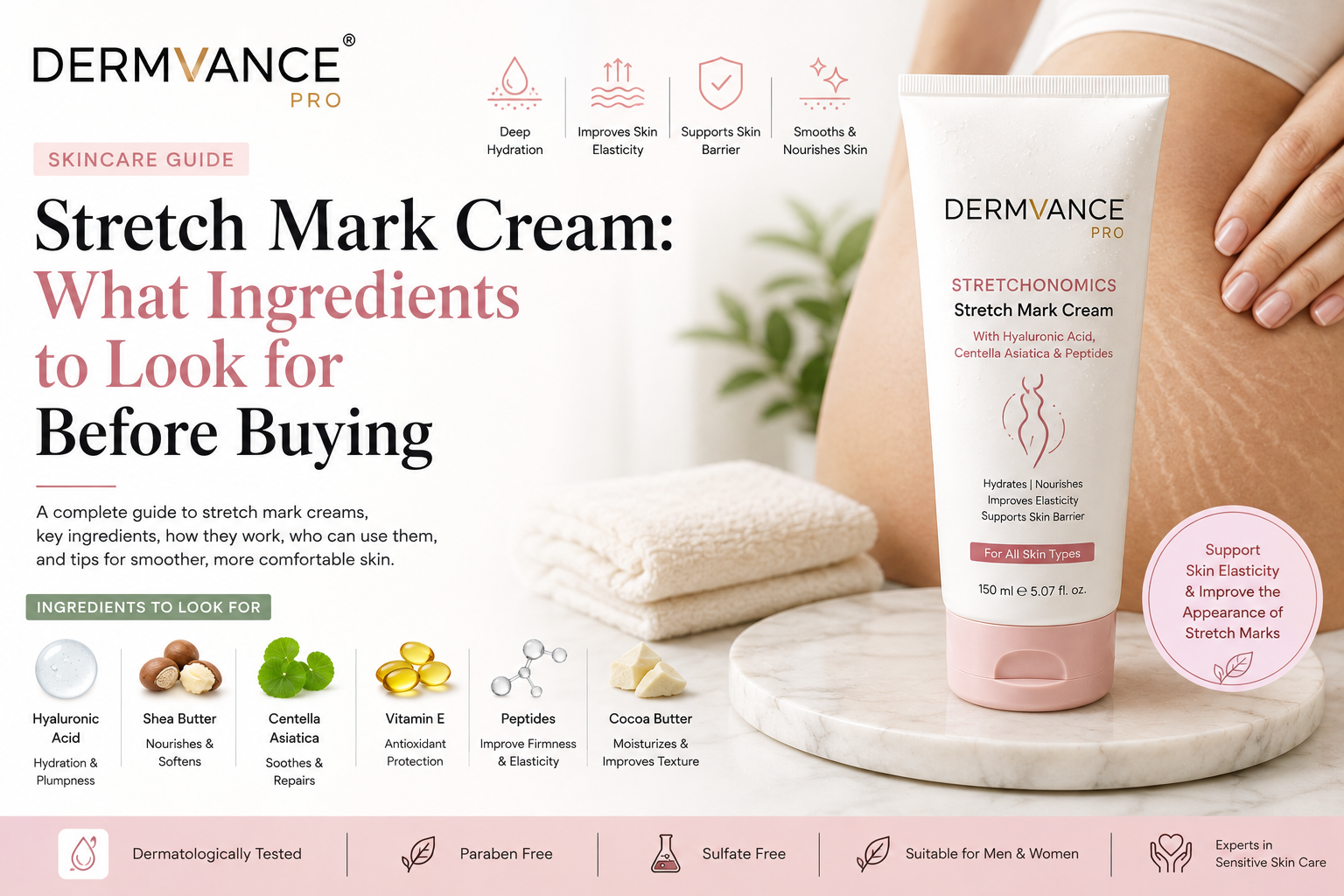
Stretch marks are a common skin concern for both women and men. They can appear after pregnancy, weight gain, weight loss, muscle growth, puberty, or any situation where the skin stretches faster than usual. Many people start searching for a stretch mark cream when they notice visible lines on the stomach, thighs, hips, arms, breasts, lower back, or shoulders.
Stretch marks are natural and common, but some people prefer to improve their appearance and support smoother, softer, more elastic-feeling skin. A good cream for stretch marks can help moisturize the skin, support comfort, improve the look of dryness, and make the affected area feel more nourished.
However, it is important to understand what a stretch mark cream can and cannot do. No topical cream can guarantee complete removal of stretch marks, especially older or deeper-looking marks. But the right ingredients, consistent use, hydration support, and gentle skincare habits may help improve how the skin looks and feels over time.
This guide explains what stretch marks are, why they happen, which ingredients to look for before buying a stretch mark cream, how to use it correctly, and how Dermvance Pro Stretchonomics products can fit into a simple body-care routine.
You can also explore Dermvance Pro Skin Care products for concern-based skincare options.
What Are Stretch Marks?
Stretch marks are visible lines or streaks that appear when the skin stretches or changes quickly. They are also commonly called striae.
They may appear as:
- Pink lines
- Red lines
- Purple marks
- Brownish marks
- White or silver lines
- Slightly raised or depressed streaks
- Lines with a different texture from surrounding skin
Stretch marks commonly appear on areas where the skin stretches, such as:
- Abdomen
- Thighs
- Hips
- Breasts
- Upper arms
- Lower back
- Buttocks
- Shoulders
- Calves
Stretch marks are not usually harmful, but they can affect confidence. Many people look for a body cream for stretch marks to support smoother-looking skin and improve dryness or roughness around the affected area.
Why Do Stretch Marks Happen?
Stretch marks happen when the skin is stretched quickly or when the skin’s support structure changes. The skin has elasticity, but when stretching happens faster than the skin can adjust, visible lines may appear.
Common causes include:
- Pregnancy
- Rapid weight gain
- Weight loss
- Puberty and growth spurts
- Muscle gain
- Bodybuilding
- Hormonal changes
- Genetics
- Dry skin
- Reduced skin elasticity
- Certain medical conditions
- Certain medications
Not everyone develops stretch marks in the same way. Genetics, skin type, skin elasticity, age, hydration level, and body changes can all affect how stretch marks appear.
New Stretch Marks vs Older Stretch Marks
Before buying a stretch mark cream, it helps to understand the difference between new and older-looking stretch marks.
New Stretch Marks
New stretch marks often appear red, pink, purple, or darker than the surrounding skin. They may sometimes feel slightly itchy or sensitive.
Newer-looking stretch marks may respond better to consistent moisturization and skincare support because the skin is still adjusting.
Older Stretch Marks
Older stretch marks often become lighter, white, silver, or slightly faded. They may also look more textured or depressed.
A cream may help improve dryness, softness, and overall appearance, but older stretch marks are usually harder to visibly improve with topical products alone.
If stretch marks are deep, widespread, or a major concern, dermatological treatments may be needed for stronger visible improvement.
Can Stretch Mark Cream Remove Stretch Marks Completely?
A stretch mark cream cannot guarantee complete removal of stretch marks. Stretch marks are related to changes in the skin’s structure, and topical products mainly support the skin surface, hydration, elasticity feel, and overall appearance.
A good stretch mark cream may help:
- Moisturize dry skin
- Support skin softness
- Improve skin comfort
- Reduce rough or tight feeling
- Support elasticity feel
- Improve the appearance of newer marks over time
- Make skin look smoother and healthier
- Support a body-care routine during skin stretching phases
But it cannot guarantee:
- Complete removal
- Instant fading
- Permanent correction
- Removal of deep stretch marks
- Same results for every skin type
- Replacement for dermatologist treatments
The goal should be realistic: support healthier-feeling skin and improve the visible appearance where possible.
What to Look for in a Stretch Mark Cream
When choosing a cream for stretch marks, do not buy only because of a strong claim on the front label. Check the formula, texture, skin type suitability, and how the product fits into your routine.
A good stretch mark cream should ideally offer:
- Deep moisturization
- Skin comfort support
- Elasticity support
- Smooth texture
- Non-irritating feel
- Easy spreadability
- Daily-use suitability
- Ingredients for hydration and nourishment
- Support for dry or stretched skin
The best product is not always the strongest-sounding one. For stretch marks, consistency and skin comfort are very important.
For users who also struggle with dry or dull facial skin, this guide on Best Moisturizer for Dry and Dull Skin explains why hydration and barrier support matter in skincare.
Best Stretch Mark Cream Ingredients to Look For
The right ingredients can make a stretch mark cream more useful for dry, tight, stretched, or rough-looking skin.
Here are some common stretch mark cream ingredients to look for before buying.
Hyaluronic Acid
Hyaluronic Acid is a popular hydration-support ingredient. It helps the skin feel more hydrated, smoother, and plumper.
In stretch mark care, hydration is important because dry skin may feel tight, itchy, or uncomfortable when stretching.
A moisturizing cream with Hyaluronic Acid may help:
- Support skin hydration
- Improve softness
- Reduce dry-feeling tightness
- Support smoother-looking skin
- Improve comfort during body changes
Hyaluronic Acid is especially useful in routines where the skin feels dry, stretched, or rough.
Glycerin
Glycerin is a commonly used moisturizing ingredient. It helps support water retention in the skin’s surface layers.
A stretch mark cream with glycerin may help the skin feel softer and more comfortable after application.
Glycerin is helpful because stretch mark-prone areas often need consistent hydration, especially during pregnancy, weight change, or dry weather.
Shea Butter
Shea butter is commonly used in body creams because it supports softness and nourishment.
It may be useful for areas like the abdomen, thighs, hips, and arms where the skin can become dry or tight.
Shea butter can help:
- Soften rough skin
- Support a smooth feel
- Improve comfort
- Reduce dry patches
- Support daily body moisturization
If your skin feels very dry, a cream with rich emollients like shea butter may feel more comforting.
Cocoa Butter
Cocoa butter is another popular body-care ingredient. Many users look for cocoa butter creams during pregnancy or body changes because it gives a rich, moisturizing feel.
Cocoa butter may help support:
- Soft skin texture
- Comfort during stretching
- Dryness relief
- Smooth application
- Nourished-looking skin
However, cocoa butter should not be seen as a guaranteed stretch mark remover. It is mainly helpful for moisturization and skin comfort.
Centella Asiatica
Centella Asiatica is commonly used in skincare products for soothing and skin comfort support.
It is often included in products designed for sensitive, stressed, or barrier-focused skincare routines.
In a stretch mark cream, Centella may be helpful when the skin feels dry, stretched, or uncomfortable.
Peptides
Peptides are commonly used in skincare products for firmness, elasticity support, and smoother-looking skin.
In stretch mark care, peptides may support the appearance of skin texture and elasticity over time.
They are often found in more advanced skincare formulas.
Niacinamide
Niacinamide is a versatile ingredient used in both face and body care. It is commonly used for skin barrier support, uneven-looking tone, and skin comfort.
For stretch mark-prone skin, niacinamide may help support:
- Skin barrier comfort
- Smooth-looking texture
- Uneven tone appearance
- Overall skin health
- Dryness-related roughness
Niacinamide can be especially useful if the stretch mark area looks uneven or the skin feels stressed.
Vitamin E
Vitamin E is commonly included in moisturizing and body-care formulas. It is often used for antioxidant support and skin nourishment.
A cream with Vitamin E may help the skin feel softer and more conditioned.
It is frequently used in products for dry skin, body care, and stretch mark support routines.
Ceramides
Ceramides help support the skin barrier. When the skin barrier is healthy, the skin feels more comfortable, hydrated, and resilient.
Stretch mark-prone skin may benefit from barrier-support ingredients because stretching skin can feel dry, tight, or itchy.
Ceramide-based formulas may be useful for people with dry or sensitive skin.
Aloe Vera
Aloe Vera is commonly used for soothing and comfort support. It can be helpful when skin feels tight, warm, dry, or uncomfortable.
In a stretch mark cream, Aloe Vera may support a calming and lightweight feel.
Natural Oils
Some stretch mark creams include oils such as almond oil, coconut oil, sunflower oil, olive oil, or jojoba oil.
These oils may help soften the skin and reduce dryness.
However, oils may not suit everyone. If you have acne-prone body skin or clogged pores on areas like the back or chest, choose carefully.
Stretch Mark Cream for Different Needs
Stretch marks can happen for different reasons. The right cream should match the user’s skin condition, comfort level, and body-care needs.
Stretch Mark Cream for Pregnancy
Many women search for stretch marks after pregnancy or stretch mark cream during pregnancy. Stretch marks commonly appear on the abdomen, breasts, hips, and thighs during pregnancy because the skin stretches as the body changes.
During pregnancy, skincare selection should be careful. Not every ingredient is suitable for pregnancy or breastfeeding.
A pregnancy-focused stretch mark routine should focus on:
- Gentle moisturization
- Hydration support
- Skin comfort
- Avoiding harsh actives
- Checking product safety
- Consulting a doctor if unsure
Pregnant or breastfeeding users should always check with a healthcare professional before using products with strong active ingredients.
A moisturizing cream for stretch marks may help reduce tightness and dryness during pregnancy, but it cannot guarantee prevention or removal.
Stretch Marks After Weight Loss
Stretch marks can become more visible after weight loss because the skin changes as body size changes.
People searching for stretch marks after weight loss often notice marks on the stomach, thighs, arms, hips, or lower back.
A cream can help support the skin by:
- Moisturizing dry areas
- Improving softness
- Supporting smoother texture
- Helping skin feel more comfortable
- Supporting a consistent body-care routine
For weight-loss-related stretch marks, results depend on skin elasticity, age, genetics, and how long the marks have been present.
Stretch Marks After Muscle Gain
Stretch marks can also appear after rapid muscle growth, especially around the shoulders, arms, chest, thighs, or back.
This is common among people who do bodybuilding, strength training, or rapid bulking.
A stretch mark cream for men or women with muscle-gain-related marks should focus on hydration, elasticity support, and daily moisturization.
Applying cream consistently after showering may help keep the skin more comfortable as the body changes.
Stretch Mark Cream for Women
A stretch mark cream for women may be useful during pregnancy, postpartum body changes, weight changes, puberty, or dry skin phases.
Common areas include:
- Abdomen
- Hips
- Thighs
- Breasts
- Buttocks
- Upper arms
The product should be selected based on skin sensitivity, ingredient suitability, and comfort.
Women who are pregnant or breastfeeding should check product safety before use.
Stretch Mark Cream for Men
Stretch marks are not only a women’s concern. Men can develop stretch marks due to puberty, weight changes, muscle gain, or genetics.
A stretch mark cream for men may be used on:
- Shoulders
- Biceps
- Chest
- Back
- Abdomen
- Thighs
- Hips
Men may prefer a cream that absorbs well and does not feel overly sticky. The key is consistent use, especially after showering.
How to Use Stretch Mark Cream Correctly
Using a stretch mark cream correctly is important for best routine support.
Step 1: Clean the Skin
Apply cream to clean skin. After bathing or showering is often a good time because the skin is clean and slightly more receptive to moisturization.
Step 2: Apply a Generous Amount
Use enough product to cover the affected area. Stretch mark-prone areas often need more moisture than the face.
Step 3: Massage Gently
Massage the cream in circular motions. This helps spread the product evenly and supports a relaxing body-care routine.
Do not rub harshly or irritate the skin.
Step 4: Use Consistently
Stretch mark care requires consistency. Apply daily or as directed on the product label.
Step 5: Focus on High-Risk Areas
Apply to areas where the skin stretches most, such as abdomen, hips, thighs, breasts, arms, and shoulders.
Step 6: Continue During Body Changes
If you are gaining weight, losing weight, pregnant, or building muscle, continue moisturizing during the change period.
Step 7: Be Patient
Visible improvement takes time. Do not expect overnight results.
Morning and Night Stretch Mark Routine
A simple skincare routine for stretch marks does not need to be complicated.
Morning Routine
- Cleanse or shower if needed
- Apply stretch mark cream to affected areas
- Allow it to absorb
- Use sunscreen if the area is exposed to sunlight
If stretch marks are exposed to the sun, sunscreen can help protect the skin and reduce the appearance of uneven tone. You can read Broad-Spectrum SPF 50 Sunscreen for All Skin Types for sunscreen guidance.
Night Routine
- Clean the area
- Apply stretch mark cream generously
- Massage gently
- Let the product absorb before dressing
Nighttime application is useful because the product can sit on the skin while you rest.
Should You Use Stretch Mark Cream Every Day?
Yes, most stretch mark creams are designed for consistent use, but always follow the product label.
Daily use can help keep the skin moisturized and comfortable.
Some people may apply stretch mark cream once daily, while others may use it twice daily depending on skin dryness and product directions.
If irritation occurs, stop using the product and check the ingredients.
Can Stretch Mark Cream Prevent Stretch Marks?
Some products are marketed as stretch mark prevention cream, but prevention is not guaranteed.
Stretch marks depend on many factors, including genetics, hormones, skin elasticity, and how quickly the body changes.
Moisturizing the skin may support comfort and elasticity feel during stretching, but it cannot guarantee that stretch marks will not appear.
A realistic goal is to keep the skin hydrated, soft, and comfortable during body changes.
Common Mistakes When Using Stretch Mark Cream
Expecting Complete Removal
No cream can guarantee complete removal of stretch marks.
Using It Only for a Few Days
Stretch mark care needs consistency. Short-term use may not show visible changes.
Applying Too Little Product
Body areas often need more product than facial skincare.
Skipping Moisturizer During Pregnancy or Weight Changes
When the skin is actively stretching, consistent moisturization is helpful for comfort.
Using Harsh Exfoliation
Harsh scrubbing can irritate the skin and may make marks look more noticeable.
Ignoring Itching or Irritation
If the skin feels itchy, dry, or irritated, use gentle moisturization and avoid harsh products.
Not Checking Pregnancy Safety
Pregnant or breastfeeding users should be careful with active ingredients.
Applying Only After Marks Become Old
Newer-looking stretch marks may be easier to support with consistent skincare than older silver marks.
Skipping Sunscreen on Exposed Areas
If stretch marks are exposed to sunlight, sunscreen can help protect the skin and reduce uneven-looking tone.
How Long Does Stretch Mark Cream Take to Show Results?
Results vary from person to person.
Some people may notice softer, smoother, more comfortable skin earlier. Visible improvement in stretch mark appearance may take longer.
Results depend on:
- Age of the stretch marks
- Skin type
- Skin tone
- Product formula
- Consistency
- Body changes
- Genetics
- Hydration
- Pregnancy or weight changes
- Overall skin elasticity
No stretch mark cream can guarantee a fixed timeline.
If you are using a cream consistently and see no visible improvement after a long period, professional treatments may be worth discussing with a dermatologist.
When Should You Consult a Dermatologist?
You may want to consult a dermatologist if:
- Stretch marks are sudden or widespread
- The skin is painful
- Marks are associated with severe itching
- Stretch marks appear without clear reason
- You have deep or textured marks
- You want stronger visible improvement
- You are pregnant and unsure about product safety
- You have sensitive or allergic skin
- Stretch marks affect your confidence significantly
Dermatologists may suggest professional options such as prescription products, lasers, microneedling, chemical peels, or other treatments depending on the case.
Why Choose Dermvance Pro Stretchonomics?
Dermvance Pro offers concern-based skincare products for face and body care, including hydration, sun protection, acne care, brightening, exfoliation, and stretch mark support.
The Stretchonomics category is designed for users looking for stretch mark-focused skincare support.
A simple Dermvance Pro-inspired stretch mark routine may include:
- Gentle cleansing
- Stretch mark cream application
- Daily moisturization
- Sunscreen on exposed areas
Stretchonomics can fit into a body-care routine for people dealing with stretch marks after pregnancy, weight changes, growth, or dry skin.
You can also explore the full Skin Care category to review other concern-based Dermvance Pro products.
Frequently Asked Questions
What is the best cream for stretch marks?
The best cream for stretch marks should support hydration, elasticity feel, skin comfort, and smoother-looking texture. Look for ingredients such as Hyaluronic Acid, glycerin, shea butter, cocoa butter, peptides, Centella Asiatica, niacinamide, Vitamin E, and ceramides.
Can stretch mark cream remove stretch marks completely?
No stretch mark cream can guarantee complete removal. A cream may help improve skin softness, hydration, comfort, and the appearance of stretch marks over time.
What ingredients should I look for in stretch mark cream?
Useful stretch mark cream ingredients may include Hyaluronic Acid, glycerin, shea butter, cocoa butter, peptides, Centella Asiatica, niacinamide, Vitamin E, ceramides, and soothing botanical ingredients.
Is stretch mark cream good after pregnancy?
Stretch mark cream may help support skin hydration and comfort after pregnancy. Pregnant or breastfeeding users should check product safety with a healthcare professional.
Can men use stretch mark cream?
Yes. Stretch mark cream can be used by men and women. Men may develop stretch marks from puberty, muscle gain, weight changes, or genetics.
Can stretch mark cream help after weight loss?
A cream may help moisturize the skin and improve softness and comfort after weight loss. Visible improvement depends on the age and depth of the marks.
How often should I apply stretch mark cream?
Follow the product label. Many users apply stretch mark cream once or twice daily, especially after showering.
Can stretch mark cream prevent stretch marks?
Moisturizing may support skin comfort and elasticity feel, but no cream can guarantee prevention.
Are older stretch marks harder to improve?
Yes. Older white or silver stretch marks are usually harder to visibly improve than newer red or purple marks.
Where can I buy Dermvance Pro Stretchonomics products?
You can explore Dermvance Pro stretch mark support products on the official Dermvance Pro website and the Stretchonomics category.
Conclusion
Stretch marks are common and can happen after pregnancy, weight changes, puberty, muscle gain, or rapid skin stretching. While they are natural, many people prefer to support smoother, softer, and more even-looking skin with a stretch mark cream.
A good stretch mark cream should focus on hydration, elasticity support, skin comfort, and consistent body moisturization. Ingredients such as Hyaluronic Acid, glycerin, shea butter, cocoa butter, peptides, Centella Asiatica, niacinamide, Vitamin E, and ceramides may support a better stretch mark care routine.
The key is to keep expectations realistic. Creams can support skin appearance, but they cannot guarantee complete removal.
Explore Dermvance Pro Stretchonomics products to build a simple body-care routine for stretch mark-prone skin.

