

Blog
SPF 30 vs SPF 50 Sunscreen: Which One Should You Choose for Daily Use?

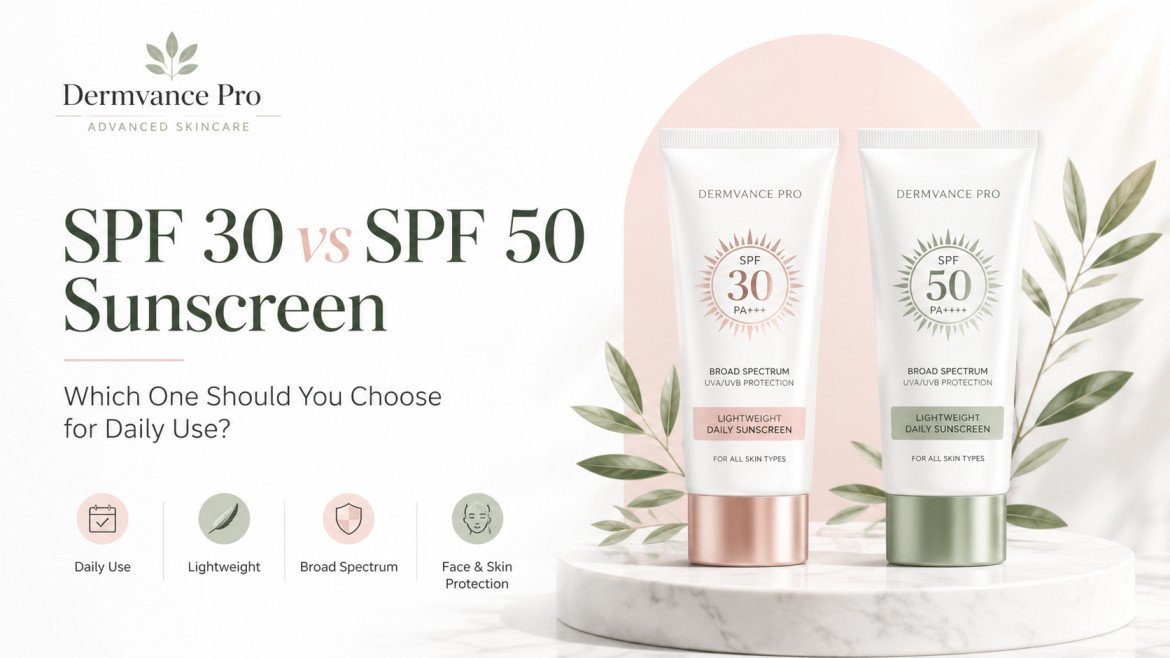
Choosing sunscreen can feel confusing, especially when you see different SPF numbers on product labels. Many people compare SPF 30 vs SPF 50 sunscreen and wonder which one is better for daily use, which one is suitable for the face, and whether a higher SPF always means better protection.
The simple answer is that both SPF 30 and SPF 50 can be useful when used correctly. The right choice depends on your skin type, sun exposure, routine, lifestyle, texture preference, and how consistently you apply sunscreen.
SPF 30 may be suitable for regular daily routines with limited sun exposure, while SPF 50 is often preferred for stronger daily protection, outdoor exposure, humid weather, travel, sports, or skin that is prone to dark spots, tanning, or uneven tone.
This guide explains what SPF means, the difference between SPF 30 and SPF 50, when to choose each one, why broad-spectrum protection matters, and how Dermvance Pro Sunonomics sunscreens can fit into your daily skincare routine.
You can also explore the Dermvance Pro Sunonomics sunscreen range for sunscreen options designed for daily skin protection.
What Does SPF Mean?
SPF stands for Sun Protection Factor. It tells you how much protection a sunscreen offers against UVB rays, which are mainly linked with sunburn.
For example:
- SPF 30 offers strong UVB protection when applied correctly.
- SPF 50 offers higher UVB protection when applied correctly.
However, SPF does not mean you can stay in the sun all day without reapplying. Sunscreen performance depends on correct application, enough quantity, sweating, swimming, rubbing, weather, and reapplication.
Many people apply less sunscreen than needed, which reduces the actual protection they receive. That is why proper usage is just as important as choosing the SPF number.
SPF 30 vs SPF 50 Sunscreen: What Is the Difference?
The main difference between SPF 30 and SPF 50 sunscreen is the level of UVB protection they provide.
SPF 50 gives slightly higher UVB protection than SPF 30, but the difference is not as large as many people think. The real benefit of SPF 50 is that it can provide an extra margin of protection, especially for people who apply too little sunscreen or spend more time outdoors.
SPF 30 Sunscreen
SPF 30 sunscreen is commonly used for daily routines. It may be suitable for people who have limited sun exposure, mostly stay indoors, or need a lightweight sunscreen for regular use.
SPF 30 can be a good choice when:
- You spend most of the day indoors
- You have short sun exposure
- You need sunscreen for basic daily routine
- You prefer lightweight textures
- You reapply properly when outdoors
- Your skin is not highly sun-sensitive
SPF 50 Sunscreen
SPF 50 sunscreen offers higher UVB protection and is often preferred for stronger daily sun care.
SPF 50 may be a better choice when:
- You spend more time outdoors
- You sweat often
- You travel frequently
- You live in sunny or humid weather
- You have dark spots or uneven tone concerns
- Your skin tans easily
- You use active skincare ingredients
- You want stronger daily protection
- You are looking for sunscreen for face and neck
If you are specifically looking for SPF 50 guidance, read Broad-Spectrum SPF 50 Sunscreen for All Skin Types.
Which Sunscreen Is Better: SPF 30 or SPF 50?
There is no single answer for everyone.
SPF 30 can be enough for many people when applied correctly and reapplied when needed. SPF 50 is often the better choice for people who want extra protection or have higher sun exposure.
For daily skincare, SPF 50 is commonly preferred because many users do not apply enough sunscreen. Choosing SPF 50 can give a better protection buffer in real-life use.
However, texture also matters. A sunscreen that feels heavy, greasy, or uncomfortable may not be used consistently. A comfortable SPF 30 that you use every day is better than an SPF 50 that you avoid because of texture.
The best sunscreen is the one that gives suitable protection and feels comfortable enough for daily use.
Why Broad-Spectrum Sunscreen Matters
SPF mainly refers to UVB protection, but the skin also needs protection from UVA rays.
UVA rays are associated with tanning, premature-looking aging, and uneven-looking tone. UVB rays are more associated with sunburn.
A good daily sunscreen should ideally be broad-spectrum, meaning it helps protect against both UVA and UVB rays.
Broad-spectrum sunscreen is especially important if your concerns include:
- Dark spots
- Uneven-looking skin tone
- Tanning
- Dull skin
- Post-acne marks
- Sun damage appearance
- Premature-looking aging
- Daily outdoor exposure
Dermvance Pro’s Sunonomics category includes sunscreen products designed to support daily sun protection routines.
SPF 30 Sunscreen: When Is It Enough?
SPF 30 sunscreen may be suitable for everyday routines when sun exposure is limited.
You may consider SPF 30 if:
- You work indoors
- You go outside only briefly
- You are not sweating heavily
- You are not swimming
- You can reapply when needed
- Your skin is not highly sun-sensitive
- You prefer a lightweight daily sunscreen
SPF 30 can be a practical option for people who want basic daily sunscreen protection and prefer a comfortable texture.
Dermvance Pro’s Sunonomics range includes SPF 30 sunscreen options that may fit daily skincare routines.
SPF 50 Sunscreen: When Is It Better?
SPF 50 sunscreen may be better when you need stronger protection or when your skin concerns make sun protection especially important.
Choose SPF 50 if:
- You spend longer time outdoors
- You live in a sunny climate
- You sweat frequently
- You are exposed during peak sun hours
- You use glycolic acid, Vitamin C, or acne products
- You have dark spots or post-acne marks
- Your skin tans easily
- You want extra daily protection
- You are traveling or exercising outdoors
If you use active skincare ingredients like glycolic acid, Vitamin C, or acne serums, SPF 50 can be a smart option for your morning routine.
You can read Glycolic Acid for Dull and Uneven Skin and Vitamin C Serum for Dull and Uneven Skin to understand why sunscreen is important with active skincare.
SPF 30 vs SPF 50 for Face
For facial use, both SPF 30 and SPF 50 can work, but SPF 50 is often preferred because the face is exposed daily and is more likely to show sun-related concerns.
The face is commonly affected by:
- Tanning
- Uneven tone
- Dark spots
- Post-acne marks
- Dullness
- Fine lines
- Texture changes
- Sun sensitivity
If you are choosing sunscreen for the face, look for:
- Broad-spectrum protection
- Comfortable texture
- Non-greasy finish
- Suitability for your skin type
- No heavy white cast if that bothers you
- Easy layering with moisturizer and makeup
- Daily-use comfort
For texture guidance, read Non-Greasy SPF 50 Sunscreen for Face.
SPF 30 vs SPF 50 for Oily Skin
Oily skin users often avoid sunscreen because many formulas feel greasy or heavy. However, oily skin still needs sunscreen.
For oily skin, the SPF number is not the only factor. Texture matters a lot.
Look for:
- Lightweight gel texture
- Non-greasy finish
- Matte or semi-matte feel
- Quick absorption
- Comfortable daily wear
- Sunscreen that does not feel sticky
- Formula suitable for acne-prone or oily skin if needed
SPF 50 may be useful for oily skin users who are dealing with acne marks, dark spots, or uneven tone. However, the sunscreen should feel comfortable enough for daily use.
If you have acne-prone skin, you can also read Acne Care Products for Oily Skin and Salicylic Acid Face Wash for Acne-Prone Skin.
SPF 30 vs SPF 50 for Dry Skin
Dry skin needs sunscreen that protects without making the skin feel tight or uncomfortable.
For dry skin, look for:
- Hydrating sunscreen texture
- Comfortable lotion or cream formula
- Moisture-supporting ingredients
- Non-drying finish
- Compatibility with moisturizer
- Smooth application
Dry skin users can use SPF 30 or SPF 50 depending on exposure level. If the skin is dull, uneven, or sensitive to sun exposure, SPF 50 may be a better daily option.
A simple dry skin morning routine may include:
Hydrating face wash → Serum → Moisturizer → Sunscreen
For hydration support, read Best Moisturizer for Dry and Dull Skin.
SPF 30 vs SPF 50 for Combination Skin
Combination skin can be oily in some areas and dry in others. The T-zone may become shiny, while the cheeks may feel dry.
For combination skin, choose a sunscreen that feels balanced.
Look for:
- Lightweight lotion or gel-cream texture
- No heavy residue
- Comfortable finish
- Works under makeup
- Does not dry out cheeks
- Does not make the T-zone overly greasy
SPF 50 may be suitable if you have uneven tone or outdoor exposure. SPF 30 may work for lighter daily routines if applied properly.
SPF 30 vs SPF 50 for Sensitive Skin
Sensitive skin should choose sunscreen carefully. The best sunscreen is one that protects without causing burning, stinging, redness, or discomfort.
For sensitive skin, consider:
- Gentle formula
- Broad-spectrum protection
- Fragrance-free or low-irritation formulas when possible
- Patch testing
- Avoiding too many active ingredients in the same routine
- Moisturizer before sunscreen if skin feels dry
SPF 50 may be helpful for sensitive skin that reacts easily to sun exposure, but comfort and tolerance are important.
If any sunscreen causes burning, rash, swelling, or persistent irritation, stop using it and consult a dermatologist.
Sunscreen for Dark Spots and Uneven Skin Tone
If you have dark spots, tanning, post-acne marks, or uneven-looking tone, sunscreen is essential.
Sun exposure can make discoloration appear more noticeable. Even if you use brightening serums, acne mark serums, glycolic acid, or dark spot products, skipping sunscreen can reduce visible progress.
For uneven tone routines, SPF 50 is usually a stronger option because it offers higher UVB protection and better support for users trying to maintain a more even-looking complexion.
You can also read:
- Dark Spots and Uneven Skin Tone: How to Build a Brightening Skincare Routine
- Azelaic Acid and Niacinamide for Acne Marks
Sunscreen for Daily Use: What to Look For
A good daily sunscreen should be easy to apply, comfortable to wear, and suitable for your routine.
Before buying sunscreen, check for:
- SPF level
- Broad-spectrum protection
- Texture
- Skin type suitability
- Water resistance if needed
- Finish on skin
- Compatibility with moisturizer
- Compatibility with makeup
- Reapplication comfort
- Product directions
A sunscreen for daily use should not feel like a burden. If it feels too sticky, greasy, or heavy, you may skip it. That is why texture is one of the most important factors in sunscreen selection.
Gel, Cream, Lotion, or Silicone Sunscreen: Which Texture Is Better?
Sunscreen texture can affect daily consistency.
Gel Sunscreen
Gel sunscreen is often lightweight and may suit oily or combination skin. It can feel fresh and less heavy.
Cream Sunscreen
Cream sunscreen may suit dry or normal skin. It can feel more moisturizing and comfortable for people who need extra hydration.
Lotion Sunscreen
Lotion sunscreen is versatile and may work for face or body depending on the formula. It often spreads easily.
Silicone Gel Sunscreen
Silicone gel sunscreen can feel smooth, lightweight, and non-greasy. It may be useful for people who dislike sticky sunscreen textures.
Dermvance Pro’s Sunonomics range includes sunscreen options in different formats, including gels and lotions, so users can choose based on skin type and preference.
How Much Sunscreen Should You Apply?
Many people do not use enough sunscreen. Applying too little reduces the actual protection.
For the face and neck, use a generous amount and spread evenly. Make sure to cover:
- Forehead
- Cheeks
- Nose
- Chin
- Jawline
- Neck
- Ears if exposed
- Hairline area
Do not forget areas like the sides of the face and neck.
The product label may give application directions, so always follow the instructions.
How Often Should You Reapply Sunscreen?
Sunscreen should be reapplied during outdoor exposure.
Reapply more often if you are:
- Sweating
- Swimming
- Wiping your face
- Exercising
- Spending long hours outdoors
- Exposed during peak sunlight
- Wearing sunscreen for extended periods
Even high SPF sunscreen needs reapplication. SPF 50 does not mean one application lasts the entire day.
Morning Skincare Routine with Sunscreen
A simple morning skincare routine with sunscreen may look like this:
Cleanser → Serum → Moisturizer → Sunscreen
Step 1: Cleanse
Use a gentle face wash suitable for your skin type.
If your skin looks dull, read Hydrating Face Wash for Dull Skin.
Step 2: Apply Serum
Use a suitable serum based on your skin concern, such as Vitamin C, acne marks serum, or hydration serum.
Step 3: Apply Moisturizer
Moisturizer helps support hydration and comfort.
Step 4: Apply Sunscreen
Sunscreen should be the final step of your morning skincare routine.
Let it settle before applying makeup.
Common Sunscreen Mistakes to Avoid
Using Too Little Sunscreen
A thin layer may not give the protection shown on the label.
Applying Sunscreen Only on Sunny Days
UV exposure can still affect skin on cloudy days.
Skipping the Neck
The neck is often exposed and should be protected.
Not Reapplying
One morning application may not last through long outdoor exposure.
Choosing Texture You Dislike
If the sunscreen feels uncomfortable, you may not use it consistently.
Depending Only on Makeup SPF
Makeup with SPF is usually not enough unless applied in proper sunscreen quantity.
Skipping Sunscreen with Active Ingredients
If you use glycolic acid, Vitamin C, acne products, or brightening serums, sunscreen is especially important.
Ignoring Water Resistance
If you sweat or swim, choose water-resistant sunscreen and reapply as directed.
SPF 30 vs SPF 50: Quick Comparison
| Factor | SPF 30 Sunscreen | SPF 50 Sunscreen |
|---|---|---|
| Protection level | Strong daily UVB protection | Higher UVB protection |
| Best for | Limited sun exposure, indoor lifestyle, basic daily use | Outdoor exposure, high sun, dark spots, active skincare routines |
| Daily face use | Suitable if applied correctly | Often preferred for extra protection |
| Oily skin | Choose lightweight texture | Choose non-greasy SPF 50 texture |
| Dry skin | Choose hydrating formula | Choose moisturizing SPF 50 formula |
| Reapplication needed | Yes | Yes |
| Broad-spectrum needed | Yes | Yes |
| Best choice | Good for regular use | Better for stronger daily protection |
Why Choose Dermvance Pro Sunonomics Sunscreens?
Dermvance Pro offers concern-based skincare products for daily routines, including sun protection, hydration, brightening, acne care, exfoliation, and skin comfort.
The Sunonomics category includes sunscreen options that can support different daily skincare needs.
Dermvance Pro sunscreen options may be suitable for users looking for:
- SPF 30 sunscreen
- SPF 50 sunscreen
- Broad-spectrum sunscreen
- Lightweight sunscreen
- Non-greasy sunscreen
- Sunscreen for face
- Sunscreen for daily use
- Sunscreen for all skin types
- Sunscreen for oily or combination skin
- Sunscreen to support dark spot routines
A simple Dermvance Pro sun-care routine may include:
- Gentle cleanser
- Serum based on skin concern
- Moisturizer
- Sunonomics sunscreen
You can explore the full Skin Care category to build a complete routine around your skin needs.
Frequently Asked Questions
Is SPF 50 better than SPF 30?
SPF 50 offers higher UVB protection than SPF 30. It may be better for outdoor exposure, dark spots, tanning concerns, active skincare routines, or users who want stronger daily protection.
Is SPF 30 enough for daily use?
SPF 30 can be enough for many daily routines if applied correctly and reapplied when needed. However, SPF 50 may provide extra protection for stronger sun exposure.
Which sunscreen is better for face, SPF 30 or SPF 50?
SPF 50 is often preferred for the face because the face is exposed daily and is more prone to sun-related concerns like dark spots, tanning, and uneven tone.
Can I use SPF 50 sunscreen every day?
Yes, SPF 50 sunscreen can be used daily if it suits your skin type and feels comfortable.
Does SPF 50 mean I do not need to reapply?
No. SPF 50 still needs reapplication during outdoor exposure, sweating, swimming, or long wear.
Is SPF 30 good for oily skin?
SPF 30 can be suitable for oily skin if the formula is lightweight and non-greasy. Texture matters as much as SPF level.
Is SPF 50 good for oily skin?
Yes, SPF 50 can be suitable for oily skin if the formula is lightweight, non-greasy, or gel-based.
Should I use sunscreen indoors?
If you are near windows or exposed to daylight for long periods, sunscreen can still be useful. It is especially important if you use active skincare ingredients.
What does broad-spectrum sunscreen mean?
Broad-spectrum sunscreen helps protect against both UVA and UVB rays.
Where can I buy Dermvance Pro sunscreen?
You can explore Dermvance Pro sunscreen products on the official Dermvance Pro website and the Sunonomics category.
Conclusion
When comparing SPF 30 vs SPF 50 sunscreen, the better choice depends on your skin type, sun exposure, routine, and comfort preference.
SPF 30 can be suitable for basic daily use with limited sun exposure. SPF 50 offers higher protection and is often preferred for outdoor exposure, active skincare routines, dark spots, acne marks, tanning concerns, and stronger daily sun care.
No matter which SPF you choose, broad-spectrum protection, correct application, and reapplication are essential.
Explore Dermvance Pro Sunonomics sunscreen products to choose a sunscreen that fits your daily skincare routine.

