

Blog
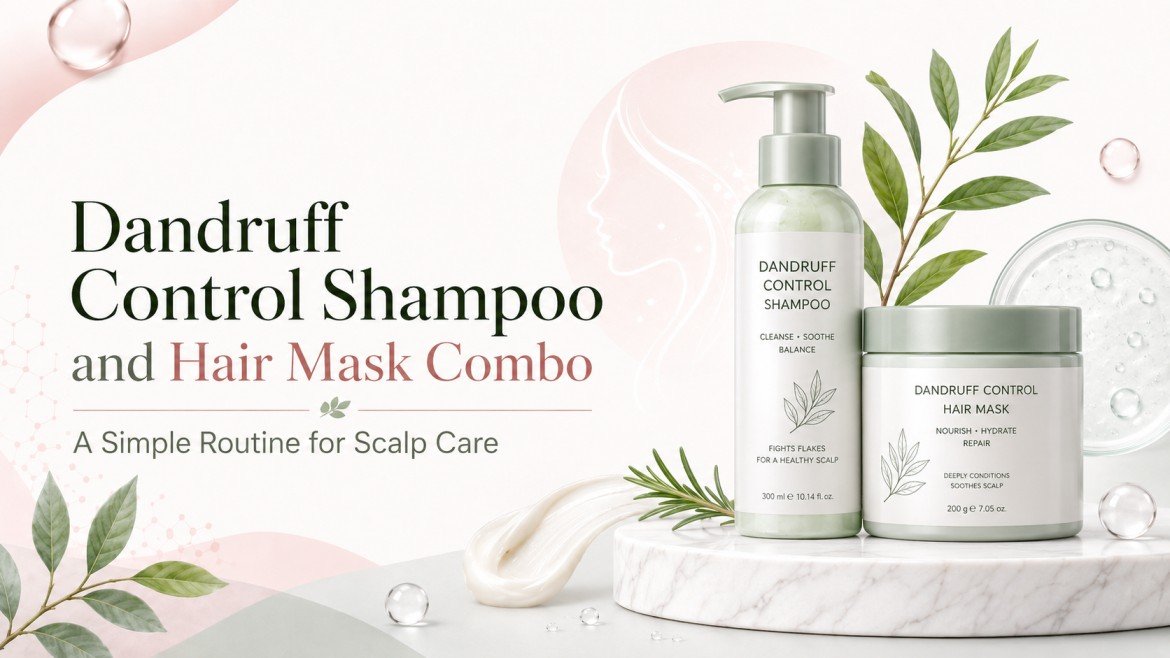
Dandruff Control Shampoo and Hair Mask Combo: A Simple Routine for Scalp Care

Visible flakes, scalp itching, oiliness, dryness, and rough hair lengths can make scalp care feel complicated. Many people respond by changing shampoos frequently, washing their hair more often, or using several products together without understanding what each one is meant to do.
A simpler approach is to use complementary products for different parts of the routine. A dandruff control shampoo and hair mask combo can support scalp cleansing while also helping the hair lengths feel softer, smoother, and easier to manage.
The shampoo is mainly used on the scalp to remove excess oil, loose flakes, sweat, and product buildup. The hair mask is generally used on the mid-lengths and ends to provide conditioning support. Used correctly, these products can form a practical scalp and hair care routine without unnecessary steps.
This guide explains how dandruff shampoo and a conditioning mask work, how to use them together, how often they may be used, and when scalp symptoms require professional advice.
What Is Dandruff?
Dandruff commonly appears as visible flakes on the scalp or hair. It may also be associated with itching, oiliness, irritation, or scalp discomfort.
The severity can vary. Some people notice occasional mild flaking, while others experience recurring or more noticeable symptoms.
It is important to understand that not every flaky scalp is necessarily dandruff. Dryness, product buildup, sensitivity, unsuitable hair products, and certain scalp conditions may produce similar signs.
A cosmetic hair care routine can support cleansing and comfort, but it cannot diagnose the cause of persistent flaking. If symptoms are severe, painful, or ongoing, a dermatologist should evaluate the scalp.
Dandruff vs. Dry Scalp: What Is the Difference?
Dandruff and dry scalp may both produce flakes, but they are not always the same problem.
Signs Commonly Associated with Dandruff
Dandruff may involve:
- Recurring visible flakes
- Scalp itching
- Oiliness around the roots
- Noticeable scalp buildup
- Flakes appearing soon after washing
- Scalp discomfort
Signs Commonly Associated with Dry Scalp
A dry scalp may feel:
- Tight or uncomfortable
- Sensitive after washing
- Rough or dehydrated
- More affected during cold or dry weather
It may also produce smaller, dry-looking flakes and be accompanied by dry hair lengths.
Why the Difference Matters
The correct care routine depends on the main concern. An oily, flaky scalp may need a different shampoo and washing frequency than a dry, sensitive scalp.
Using a strong cleansing product too frequently may make dryness worse. At the same time, applying heavy oils or masks directly to an oily scalp may increase product buildup.
When the cause is unclear or symptoms continue despite consistent care, professional guidance is recommended.
Why Use Dandruff Shampoo and a Hair Mask Together?
A shampoo and hair mask perform different but complementary roles.
A dandruff control shampoo is primarily intended to cleanse the scalp. It removes oil, sweat, loose flakes, and product residue that may collect around the roots.
A hair mask primarily conditions the hair lengths. It helps improve softness, smoothness, and manageability, especially when frequent shampooing leaves the ends feeling dry.
Using both products in the same routine can help balance scalp cleansing with hair conditioning.
The basic approach is:
- Use dandruff shampoo mainly on the scalp.
- Rinse it thoroughly.
- Apply the hair mask to the mid-lengths and ends.
- Avoid applying the mask to the scalp unless the label specifically allows it.
- Rinse and dry the hair gently.
Dermvance Pro offers concern-based hair and scalp care products through its Hair Care collection.
What Does a Dandruff Control Shampoo Do?
A dandruff-focused shampoo is used to cleanse the scalp and support a routine for visible flakes and buildup.
Depending on its formulation, it may help:
- Remove excess scalp oil
- Wash away loose flakes
- Reduce product buildup
- Keep the scalp feeling cleaner
- Support regular scalp hygiene
- Improve the fresh feeling after washing
The shampoo should be applied mainly to the roots and scalp rather than repeatedly rubbing it through dry hair ends.
Some dandruff shampoos require a short contact time before rinsing. Others are designed to be washed out immediately. Always follow the instructions printed on the product label.
Dermvance Pro’s Haironomics collection includes products developed for hair and scalp concerns, including a dandruff-control shampoo and conditioning-mask combination.
What Does a Hair Mask Do?
A hair mask is a conditioning product designed to support dry, rough, tangled, or difficult-to-manage hair.
A suitable mask may help:
- Improve softness
- Support smoother-looking hair
- Reduce the rough feel of dry lengths
- Improve manageability
- Make detangling easier
- Support conditioning after scalp-focused cleansing
A hair mask for dry and damaged hair is normally applied to the mid-lengths and ends, where dryness and roughness are usually more noticeable.
Unless a mask is specifically labeled for scalp application, avoid applying a heavy layer directly to the roots. This may leave the scalp feeling greasy or contribute to buildup for some users.
Can a Hair Mask Treat Dandruff?
A regular cosmetic hair mask does not replace a dandruff-control shampoo.
Its main role is conditioning, not scalp treatment. It can help reduce dryness and roughness in the hair lengths, but it should not be described as a cure for dandruff.
Some products are developed as scalp and hair masks. These should only be applied to the scalp when the directions clearly allow it.
If a standard conditioning mask is applied heavily around oily roots, it may make the scalp feel greasy or cause residue to collect more quickly.
For this reason, the most practical approach is usually:
- Shampoo on the scalp
- Mask on the lengths
- Scalp application only when specifically instructed
How to Choose the Right Dandruff Shampoo
Not every dandruff shampoo is suitable for every scalp. Before selecting a product, consider your scalp type, washing frequency, level of flaking, and sensitivity.
Check the Product Purpose
Choose a shampoo clearly designed for dandruff, flakes, buildup, or scalp care.
A general cosmetic shampoo may cleanse the hair but may not be formulated specifically for a flaky scalp routine.
Review the Full Ingredient List
Do not choose a product only because one ingredient is highlighted on the front label.
The full formula, concentration, supporting ingredients, usage directions, and your scalp tolerance all matter.
Consider Your Scalp Type
An oily scalp may benefit from a cleansing formula that removes excess buildup. A dry or sensitive scalp may need a gentler approach.
People with a combination scalp may have oily roots and dry ends, making a shampoo-and-mask routine particularly useful.
Check the Recommended Frequency
Some shampoos are designed for frequent use, while others are intended for only a few washes each week.
Using a shampoo more often than directed may increase dryness or irritation.
Follow Contact-Time Instructions
Some dandruff-focused shampoos need to remain on the scalp for a short period before rinsing.
Do not leave a product on longer than directed, assuming that more time will produce better results.
Do Not Judge Only by Foam
A large amount of foam does not necessarily mean a shampoo is cleansing the scalp more effectively.
Use the recommended quantity and focus on gentle, even application.
Ingredients Commonly Used in Dandruff-Focused Shampoos
Dandruff-care products may contain different ingredients depending on their formula and intended use.
Commonly used categories include:
Flake-Removing Ingredients
Some formulas contain ingredients used to loosen or remove scalp buildup and visible flakes.
These products should be used carefully because excessive use may leave the scalp feeling dry.
Oil-Control Ingredients
Certain formulas are designed to reduce excess surface oil and support a fresher scalp feel.
They may be more suitable for people whose dandruff is accompanied by oily roots.
Soothing Ingredients
Hair care products may include ingredients intended to support scalp comfort and reduce the dry or tight feeling associated with cleansing.
Hydrating Ingredients
Humectants and conditioning agents may help limit the drying feel of a scalp-cleansing routine.
Only evaluate the ingredients actually listed on the product label. Avoid assuming that a formula contains a specific active ingredient unless it is clearly stated.
How to Choose the Right Hair Mask
The right hair mask depends on your hair texture, dryness level, scalp type, and styling habits.
Consider the following points:
- Choose a mask based on dryness or damage level.
- Check whether it is intended for scalp use or lengths only.
- Use lighter textures if the hair becomes weighed down easily.
- Avoid heavy application near oily roots.
- Follow the recommended use frequency.
- Confirm how long the mask should remain on the hair.
- Rinse completely to avoid residue.
A scalp and hair nourishing mask can complement a dandruff-focused shampoo by conditioning the parts of the hair that feel dry after washing.
Step-by-Step Scalp Care Routine for Dandruff
A simple scalp care routine for dandruff should focus on gentle cleansing, correct product placement, complete rinsing, and consistent use.
Step 1: Wet the Scalp and Hair Thoroughly
Use lukewarm water to fully wet the scalp and hair.
Thorough wetting helps shampoo spread more evenly and may reduce the need to use excessive product.
Very hot water may leave the scalp and hair feeling dry or uncomfortable.
Step 2: Apply Shampoo Mainly to the Scalp
Apply the recommended amount of shampoo around the roots and scalp.
Divide the hair into sections if necessary to distribute the product more evenly.
Massage gently using the fingertips. Avoid scratching with the nails, as this may irritate the scalp.
There is no need to aggressively rub shampoo through the ends. The lather that runs through the lengths during rinsing is often enough for general cleansing.
Step 3: Follow the Contact-Time Directions
If the shampoo instructions recommend leaving it on briefly, follow the stated timing.
Do not guess the contact time or leave the product on for much longer than recommended.
Step 4: Rinse Thoroughly
Rinse until the shampoo and loose residue are completely removed.
Incomplete rinsing may leave the scalp feeling coated or uncomfortable.
Step 5: Remove Excess Water
Before applying the mask, gently squeeze excess water from the hair.
A mask may spread more effectively when the hair is damp rather than dripping wet.
Step 6: Apply the Hair Mask
Apply the mask mainly to the mid-lengths and ends.
Focus on areas that feel dry, rough, tangled, or damaged. Avoid the scalp unless the product specifically states that it is suitable for scalp use.
Use only the recommended quantity.
Step 7: Leave the Mask on as Directed
Follow the product instructions for application time.
Leaving the mask on much longer than recommended does not necessarily improve conditioning and may make fine hair feel heavy.
Step 8: Rinse Completely
Rinse the mask thoroughly with lukewarm or slightly cool water.
Ensure that no heavy residue remains around the roots.
Step 9: Dry the Hair Gently
Avoid aggressive towel rubbing.
Pat the hair gently or wrap it in a soft towel. Limit high-heat drying when possible, especially if the lengths already feel dry or fragile.
How Often Should You Use Dandruff Shampoo?
The correct frequency depends on the formula, scalp type, level of flaking, and product directions.
Some people use a dandruff shampoo two or three times weekly. Others alternate it with a gentle regular shampoo.
The most important rule is to follow the product instructions.
Using dandruff shampoo too frequently may leave the scalp or hair lengths feeling dry. Using it too rarely may make it difficult to maintain a consistent routine.
Adjustments should be based on how the scalp responds rather than on a rigid schedule.
How Often Should You Use a Hair Mask?
Many people use a hair mask once or twice weekly, but the ideal frequency varies.
Dry, coarse, or chemically treated hair may benefit from more conditioning support. Fine or oily hair may need a smaller amount or less frequent use.
A weekly scalp care routine should not become overloaded with heavy products. More frequent mask application does not automatically produce better results.
Follow the label directions and adjust according to the way your hair feels.
Sample Weekly Shampoo and Hair Mask Routine
The following examples are general routine ideas rather than personalized treatment plans.
Mild Flaking and Normal Hair
A simple schedule may look like:
- First wash: Dandruff-control shampoo and hair mask
- Second wash: Gentle regular shampoo
- Third wash: Dandruff-control shampoo if needed
Apply the mask only on one or two wash days, depending on hair dryness.
Oily Scalp and Dry Hair Ends
Use the dandruff shampoo mainly around the roots.
Apply the conditioning mask from the mid-lengths to the ends, avoiding the scalp.
This approach helps cleanse oily roots without leaving the dry sections completely unconditioned.
Dry or Sensitive Scalp
Use dandruff shampoo only according to its directions.
Avoid hot water, rough scrubbing, and frequent washing. Apply a lightweight conditioning mask to the lengths.
If flaking or discomfort continues, consult a dermatologist rather than increasing product frequency.
Common Mistakes to Avoid
Scratching with the Nails
Scratching may increase irritation, redness, or discomfort.
Massage shampoo gently using the fingertips.
Applying Hair Mask to an Oily Scalp
Unless the product is specifically designed for the scalp, heavy mask application around the roots may increase greasiness and buildup.
Using Too Much Shampoo
More shampoo does not necessarily provide better cleansing.
Use the recommended amount and distribute it evenly.
Rinsing Too Quickly
If the shampoo requires contact time, rinsing immediately may not match the intended usage directions.
Using Very Hot Water
Hot water can leave the scalp and hair lengths feeling dry.
Use lukewarm water for washing and rinsing.
Skipping Conditioning Completely
Some scalp-cleansing shampoos may leave the lengths feeling rough. A mask can provide conditioning support without being placed directly on the scalp.
Switching Products Too Frequently
Constantly changing products makes it difficult to understand how the scalp is responding.
Use a consistent routine unless irritation occurs or a professional advises a change.
Ignoring Scalp Hygiene
Dirty brushes, combs, towels, pillowcases, and styling tools may contribute to unwanted buildup.
Clean them regularly.
Expecting a Permanent Cure from Cosmetic Products
Hair care products can support cleansing and comfort, but recurring or severe scalp concerns may need professional assessment.
Hair Care Habits That Support a Healthier Scalp Routine
A good hair care routine for a flaky scalp also depends on everyday habits.
Helpful practices include:
- Washing according to scalp needs
- Rinsing shampoo and masks completely
- Cleaning combs and brushes regularly
- Avoiding excessive dry shampoo buildup
- Washing after heavy sweating when needed
- Drying the scalp properly after washing
- Changing pillowcases and towels regularly
- Reducing excessive heat styling
- Avoiding repeated harsh chemical treatments
- Limiting heavy products around oily roots
- Avoiding very tight hairstyles if they increase discomfort
These habits support a cleaner and more manageable routine but do not replace medical care when symptoms are severe.
Can You Use Hair Serum After Dandruff Shampoo?
A hair serum may be used after shampooing if it is compatible with your routine.
The correct application depends on the serum type.
A scalp serum is designed for the scalp or roots. A smoothing serum may be intended only for the hair lengths.
Avoid applying several scalp products together unless the combination has been professionally recommended. Too many leave-on products may increase buildup or make it difficult to identify the cause of irritation.
For more guidance, read Hair Growth Serum with Biotin and Keratin: How It Supports Stronger-Looking Hair.
When Should You See a Dermatologist?
Professional evaluation is recommended when scalp symptoms are:
- Severe or persistent
- Painful
- Very red or swollen
- Producing thick scales
- Associated with sores or discharge
- Accompanied by noticeable hair shedding
- Spreading beyond the scalp
- Not improving with a consistent routine
- Associated with patchy hair loss
Dandruff-like symptoms may overlap with other scalp conditions. A dermatologist can examine the scalp and recommend appropriate care.
Why Choose Dermvance Pro for Scalp and Hair Care?
Dermvance Pro organizes its products around specific skin, hair, and scalp concerns.
Its hair care range includes products for:
- Scalp cleansing
- Dandruff care
- Hair conditioning
- Dry and rough hair
- Hair strength support
- Scalp and hair nourishment
- Hair-fall-focused routines
The Haironomics collection includes a Hair & Scalp Repair Combo that combines HDR 5 Dandruff Control Shampoo with a Deep Conditioning Hair Mask.
This allows users to support both scalp cleansing and hair-length conditioning within one structured routine.
Frequently Asked Questions
Can I use dandruff shampoo and a hair mask on the same day?
Yes. Use the shampoo mainly on the scalp and the mask mainly on the mid-lengths and ends, unless the directions state otherwise.
Should a hair mask be applied to the scalp?
Only apply it to the scalp if the product is specifically designed and labeled for scalp use.
How often should I use dandruff-control shampoo?
Follow the product directions. Frequency may depend on the formula, scalp oiliness, level of flaking, and sensitivity.
Can dandruff shampoo make hair feel dry?
Some dandruff-focused shampoos may leave the lengths feeling dry. A suitable conditioning mask can help support softness and manageability.
Is dandruff the same as dry scalp?
No. They can produce similar flakes, but their causes and care needs may be different.
Can I use hair oil with dandruff shampoo?
It depends on the scalp and product. Heavy oiling may increase buildup for some people, particularly around oily roots.
Can I use hair serum after washing?
Yes, provided the serum is suitable for the intended area and used according to its directions.
How long does a dandruff routine take to show improvement?
Results vary depending on the product, consistency, scalp condition, and underlying cause. Avoid expecting a fixed or guaranteed timeline.
When should I consult a dermatologist?
Consult a dermatologist if symptoms are severe, painful, inflamed, persistent, associated with sores, or accompanied by significant hair loss.
Where can I buy Dermvance Pro dandruff and hair mask products?
Visit the official Dermvance Pro website and explore the Haironomics product range.
Conclusion
A dandruff-control shampoo and hair mask have different but complementary roles.
The shampoo focuses mainly on cleansing the scalp, removing loose flakes, and managing oil and buildup. The hair mask supports softness, conditioning, and manageability in the lengths.
For a simple routine, apply shampoo mainly to the scalp, follow the stated contact time, rinse thoroughly, and use the hair mask on the mid-lengths and ends unless it is specifically approved for scalp application.
Explore Dermvance Pro hair care products and build a practical scalp-cleansing and conditioning routine based on your needs. Seek professional advice when symptoms are severe, persistent, painful, or associated with significant hair shedding.

