

Blog
Vitamin C Serum for Dull and Uneven Skin: Benefits, Usage, and Routine

Dull and uneven-looking skin can make the complexion appear tired, rough, or less radiant. Sun exposure, dehydration, environmental stress, inconsistent skincare, post-acne marks, and natural changes in the skin can all affect how bright and even the face looks.
A vitamin C serum for dull and uneven skin is commonly added to skincare routines because it can support a brighter-looking complexion, improve the appearance of uneven tone, and provide antioxidant care. However, the results and overall experience depend on more than the words “Vitamin C” on the label.
The type of Vitamin C, concentration, supporting ingredients, packaging, application order, and sunscreen use all matter. A concentrated formula should also be introduced carefully, particularly if the skin is sensitive or already exposed to several active ingredients.
This guide explains what Vitamin C serum does, how to use it correctly, when to apply it, which ingredients can be combined with it, and how to build a practical routine for dull and uneven-looking skin.
What Is Vitamin C Serum?
A Vitamin C serum is a concentrated leave-on skincare product designed to deliver Vitamin C and other supporting ingredients directly to the skin.
It is usually applied after cleansing and before moisturizer. Depending on the formula and the product directions, it may be used in the morning, evening, or once daily.
A vitamin C serum for face is commonly included in routines focused on:
- Dull-looking skin
- Uneven-looking tone
- Visible dark spots
- Post-acne marks
- Environmental stress
- General loss of radiance
- Early visible signs of skin aging
Vitamin C serum should not be expected to permanently change natural skin color or medically treat pigmentation conditions. Its role is to support the visible appearance and overall quality of the skin as part of a consistent routine.
For a broader overview of routine-building, read What Is Dermvance Pro Skincare? A Complete Guide to Skin Care Products.
Why Can Skin Look Dull or Uneven?
Skin dullness does not have one single cause. Several daily and environmental factors may affect the way the skin reflects light and how even the complexion appears.
Common contributing factors include:
- Repeated sun exposure
- Dehydration
- Dry or rough skin texture
- Dead skin buildup
- Air pollution
- Inconsistent cleansing
- Lack of sunscreen
- Post-acne marks
- Harsh or irritating products
- Poor sleep
- Stress
- Natural age-related changes
Skin may also appear uneven when some areas are dry while others are oily, or when visible marks remain after breakouts.
A skincare routine can support brightness and smoother-looking skin, but persistent, rapidly changing, or medically concerning pigmentation should be evaluated by a qualified dermatologist.
How Does Vitamin C Support Dull and Uneven-Looking Skin?
Topical Vitamin C is widely used in brightening and antioxidant-focused skincare routines.
When used consistently in a suitable formula, it may help:
- Support a brighter-looking complexion
- Improve the appearance of dullness
- Promote a more even-looking tone
- Reduce the visible appearance of dark spots over time
- Support the appearance of post-acne marks
- Help the skin look more refreshed
- Provide antioxidant support against environmental stress
A vitamin C serum for dull and uneven skin works best as one part of a complete routine. Cleansing, hydration, moisturizer, sunscreen, and consistent product use all affect the overall result.
Vitamin C does not replace sunscreen. In fact, a brightening routine should always include daily broad-spectrum sun protection.
Key Benefits of Vitamin C Serum for the Face
Supports Brighter-Looking Skin
One of the main reasons people use Vitamin C is to improve the appearance of tired or dull skin.
With regular use, a vitamin C serum for glowing skin may help the complexion look fresher and more radiant. Hydration and a smoother skin surface can also contribute to a brighter appearance.
Helps Improve the Appearance of Uneven Tone
Uneven-looking tone may develop because of sun exposure, dryness, visible marks, or irritation.
Vitamin C is commonly used in routines designed to improve the appearance of tone irregularities. Results vary by person and usually require consistency.
Supports the Appearance of Dark Spots
A vitamin C serum for dark spots may be included in routines for visible discoloration and post-acne marks.
However, dark spots can have different causes. Deep, persistent, rapidly changing, or unusual pigmentation should be assessed professionally.
Provides Antioxidant Support
Vitamin C is an antioxidant ingredient. In topical skincare, antioxidants are used to support the skin against environmental stressors such as pollution and daily exposure.
This does not mean Vitamin C prevents all environmental damage, but it can complement a well-planned skincare routine.
Complements Daily Sunscreen
Vitamin C and sunscreen perform different roles.
Vitamin C supports antioxidant and brightening care, while sunscreen helps protect the skin from UV exposure. Using both can create a more complete morning routine.
Supports Smoother-Looking Skin
When combined with hydration and moisturizer, Vitamin C serum may help improve the overall appearance and feel of the skin.
What Is L-Ascorbic Acid?
L-Ascorbic Acid is a commonly used form of topical Vitamin C.
It is often selected for brightening and antioxidant formulations. Its effectiveness and skin tolerance depend on factors such as:
- Concentration
- Product pH
- Supporting ingredients
- Packaging
- Storage
- Frequency of use
- Individual skin sensitivity
L-Ascorbic Acid can feel active on the skin. Some users may notice mild tingling, while others may experience dryness or irritation.
A stronger percentage does not automatically mean that a product is better for every skin type.
Is 20% Vitamin C Serum Suitable for Everyone?
A 20% vitamin C face serum is relatively concentrated and may not be the ideal starting point for every user.
People who already use Vitamin C or other active skincare products may tolerate it differently from beginners. Sensitive or reactive skin may require a slower introduction.
When starting a concentrated Vitamin C serum:
- Follow the product directions.
- Use only the recommended amount.
- Consider patch testing.
- Start at a lower frequency if advised.
- Avoid introducing several new active products at once.
- Monitor the skin for ongoing irritation.
- Stop use if significant burning, swelling, rash, or persistent redness develops.
Using extra product does not provide faster results. It may only increase the likelihood of discomfort.
Why Supporting Ingredients Matter
A serum should be evaluated as a complete formula rather than only by its Vitamin C percentage.
Supporting ingredients can influence hydration, texture, comfort, and the overall focus of the product.
Vitamin C and Hyaluronic Acid
A vitamin C and hyaluronic acid serum combines brightening-focused care with hydration support.
Hyaluronic Acid is commonly used to help the skin retain moisture and feel softer or more comfortable. This can be useful because concentrated Vitamin C formulas may sometimes feel drying.
Hyaluronic Acid does not replace moisturizer for every user, but it can make the routine feel more balanced.
Vitamin C and Niacinamide
A vitamin C serum with niacinamide can support several skincare goals within one formula.
Niacinamide is commonly used in products focused on:
- Skin barrier support
- Oil balance
- Uneven-looking tone
- Overall skin appearance
- Hydration and comfort
The idea that Vitamin C and niacinamide can never be used together is outdated. Many modern finished formulas combine them successfully.
However, when using separate active products, introducing them gradually may help reduce irritation.
Vitamin C and Kojic Acid
A vitamin C serum with kojic acid may be used in routines focused on visible dark spots and uneven-looking tone.
Because both ingredients can be part of a brightening-focused formula, careful introduction is important. Users with sensitive skin should follow the directions closely and avoid combining several strong products without guidance.
Daily sunscreen is essential when using a brightening routine.
Who May Benefit from a Vitamin C Serum?
Vitamin C serum may be considered by:
- People concerned about dull-looking skin
- Users with uneven-looking tone
- People with visible post-acne marks
- Users noticing dark spots
- People who want a brighter-looking complexion
- Men and women building an antioxidant routine
- Users looking for targeted brightening support
- People who already use daily sunscreen
A vitamin C serum for men and women should be selected based on skin type, concentration, tolerance, and routine needs rather than gender.
Who Should Use Vitamin C Serum Carefully?
Extra caution may be appropriate for people with:
- Very sensitive or reactive skin
- Active irritation
- Broken skin
- Known ingredient allergies
- Multiple exfoliating products in the same routine
- Prescription skincare treatments
- Diagnosed skin conditions
- Recent cosmetic procedures
Professional guidance may be helpful if you are unsure whether a concentrated Vitamin C serum fits your current routine.
How to Use Vitamin C Serum Correctly
Correct application helps reduce unnecessary irritation and makes the routine easier to maintain.
Step 1: Cleanse the Skin
Use a gentle cleanser suitable for your skin type.
Rinse thoroughly and pat the face dry. Avoid applying active serum to skin that feels irritated or has been scrubbed aggressively.
Step 2: Apply the Recommended Amount
Use only the quantity stated on the product label.
More serum does not mean faster or better results.
Step 3: Spread the Serum Evenly
Apply the serum gently across the face and neck.
Avoid the immediate eye area, lips, broken skin, and visibly irritated areas unless the product directions state otherwise.
Step 4: Allow It to Settle
Wait briefly before applying the next product.
This may help reduce pilling and improve layering.
Step 5: Apply Moisturizer
Use a moisturizer based on your skin type and hydration needs.
Dry skin may require a richer moisturizer, while oily skin may prefer a lightweight texture.
Step 6: Finish with Sunscreen in the Morning
Sunscreen should be the final skincare step before makeup.
This is an essential part of how to use Vitamin C serum in a daytime routine.
Morning Skincare Routine with Vitamin C
A simple morning skincare routine with Vitamin C may look like this:
- Gentle cleanser
- Vitamin C serum
- Moisturizer, if needed
- Broad-spectrum sunscreen
- Makeup, if used
Morning use is popular because Vitamin C can complement an antioxidant and sun-protection routine.
Allow each product to settle before applying the next layer. Heavy layering can cause pilling or make the routine feel uncomfortable.
For sunscreen guidance, read:
- Broad-Spectrum SPF 50 Sunscreen for All Skin Types: A Complete Buying Guide
- Non-Greasy SPF 50 Sunscreen for Face: Why Texture Matters in Daily Use
Night Skincare Routine with Vitamin C
Some users prefer applying Vitamin C at night.
A simple evening routine may include:
- Remove makeup and sunscreen
- Cleanse the face
- Apply Vitamin C serum, if directed
- Apply moisturizer
Night use may be helpful for people who prefer fewer layers in the morning.
Avoid combining several strong active products in the same routine unless the combination is suitable for your skin or recommended professionally.
What Is the Best Time to Apply Vitamin C Serum?
The best time to apply Vitamin C serum depends on the product, skin tolerance, and personal routine.
Morning use can complement sunscreen and antioxidant care. Evening use may be easier for users who prefer a simpler daytime routine.
Some products may be suitable for once- or twice-daily use, but the label instructions should always take priority.
The best schedule is one that allows consistent use without ongoing irritation.
Should Vitamin C Serum Be Used Every Day?
Daily use may be suitable for some users, but not everyone needs to begin with everyday application.
Beginners or sensitive-skin users may need to introduce the product gradually. More frequent application does not guarantee faster improvement.
Reduce use or seek guidance if the skin develops:
- Persistent redness
- Significant burning
- Swelling
- Rash
- Severe dryness
- Ongoing discomfort
Can Vitamin C Serum Be Used with Niacinamide?
Yes. Vitamin C and niacinamide can be used together.
Many professionally formulated products contain both ingredients. When the ingredients are already combined in one finished formula, use the product according to its directions.
When using separate serums, introduce one at a time and monitor the skin.
Can Vitamin C Be Used with Hyaluronic Acid?
Yes. Vitamin C and Hyaluronic Acid are commonly paired.
Vitamin C supports brightness and antioxidant care, while Hyaluronic Acid supports hydration.
A combined formula can simplify the routine and reduce the need for several separate serums.
Can Vitamin C Be Used with Salicylic Acid or Other Exfoliants?
Vitamin C and exfoliating ingredients can sometimes be used within the same broader routine, but combining several active products may increase dryness or irritation.
Beginners should avoid introducing them all at once.
They may be used at different times or on alternate days depending on the products and skin tolerance. People with acne-prone skin should keep the routine simple and introduce one active product at a time.
Read Acne Care Products for Oily Skin: How to Build a Simple Routine for more guidance.
Can Vitamin C Be Used with Retinoids?
Vitamin C and retinoids are both active skincare ingredients and may cause irritation when introduced too quickly.
Some users separate them by using Vitamin C in the morning and a retinoid at night. However, the correct approach depends on the specific products and skin tolerance.
People using prescription retinoids should follow their dermatologist’s advice.
Why Sunscreen Is Essential in a Brightening Routine
Sun exposure can make dark spots and uneven-looking tone appear more noticeable.
Vitamin C serum alone is not a complete brightening routine. Broad-spectrum sunscreen should be applied every morning.
A practical sun-protection routine also includes:
- Reapplying sunscreen during extended outdoor exposure
- Wearing protective clothing
- Using hats when appropriate
- Seeking shade
- Avoiding unnecessary prolonged sun exposure
Choose a sunscreen texture that feels comfortable enough for regular use.
How Long Does Vitamin C Serum Take to Show Visible Results?
Results vary based on:
- Skin type
- Main concern
- Formula
- Concentration
- Frequency
- Consistency
- Sunscreen use
- Supporting products
Some users may notice improved hydration or skin feel before they notice changes in uneven-looking tone or dark spots.
Visible pigmentation concerns often require more time and consistent sun protection.
No serum can guarantee a fixed timeline.
How to Choose a Vitamin C Serum
Check the Form of Vitamin C
Look at whether the formula contains L-Ascorbic Acid or a Vitamin C derivative.
Different forms may vary in stability, concentration, and tolerance.
Review the Concentration
Higher concentration does not automatically mean better results.
Choose a strength that suits your experience and skin tolerance.
Check Supporting Ingredients
Ingredients such as Hyaluronic Acid and Niacinamide may support hydration and comfort.
Brightening ingredients such as Kojic Acid may make the formula more targeted but may also require careful introduction.
Consider Your Skin Type
Oily skin may prefer a lightweight formula. Dry skin may need more hydration. Sensitive skin may require a gentler product or slower application schedule.
Review the Packaging
Vitamin C can be affected by light, heat, and air.
Packaging that limits exposure may help support product stability.
Check Usage and Storage Directions
Always follow the label for application frequency, quantity, and storage.
You can explore the Dermvance Pro Vitonomics collection and the Vitamin C 20% Serum for complete product information.
How to Store Vitamin C Serum
To support product quality:
- Keep the bottle tightly closed.
- Store it away from direct sunlight.
- Avoid excessive heat.
- Do not leave the bottle open.
- Follow the manufacturer’s storage directions.
- Do not use the product after its expiration date.
- Monitor major changes in color, smell, or texture.
Signs Your Vitamin C Serum May Have Oxidized
Possible signs may include:
- Significant darkening
- Noticeable odor change
- Unexpected texture change
- Packaging left open repeatedly
- Prolonged exposure to heat or sunlight
A small color difference does not always mean the product is unusable. Follow the manufacturer’s guidance when product quality is uncertain.
Common Mistakes to Avoid
Applying Too Much Serum
Extra product does not create faster results.
Using It Too Frequently at First
A concentrated formula may need gradual introduction.
Applying It to Irritated Skin
Avoid applying active serum to broken or severely irritated skin.
Combining Too Many Active Ingredients
Using Vitamin C, acids, retinoids, and several brightening products together can make irritation more likely.
Skipping Moisturizer
Moisturizer can support hydration and comfort.
Skipping Sunscreen
Sunscreen is essential in a brightening routine.
Storing the Product Incorrectly
Heat, air, and direct light may affect product stability.
Expecting Overnight Results
Visible tone changes usually require consistent use.
Ignoring Persistent Irritation
Ongoing burning, swelling, rash, or redness should not be treated as a sign that the product is working.
Vitamin C Routine by Skin Type
For Oily Skin
Use a lightweight serum, minimal layering, and non-greasy sunscreen.
Add moisturizer only as needed based on skin comfort.
For Dry Skin
Use a gentle cleanser, hydrating serum formula, moisturizer, and comfortable sunscreen.
A Vitamin C and Hyaluronic Acid formula may help simplify the routine.
For Combination Skin
Use balanced hydration and adjust moisturizer application based on facial areas.
For Sensitive Skin
Patch-test when appropriate, introduce the product gradually, and avoid combining several strong active ingredients.
For Acne-Prone Skin
Avoid overloaded routines.
Introduce Vitamin C separately from new acne-focused products and maintain consistent sunscreen use to support post-acne mark care.
Why Choose Dermvance Pro Vitamin C 20% Serum?
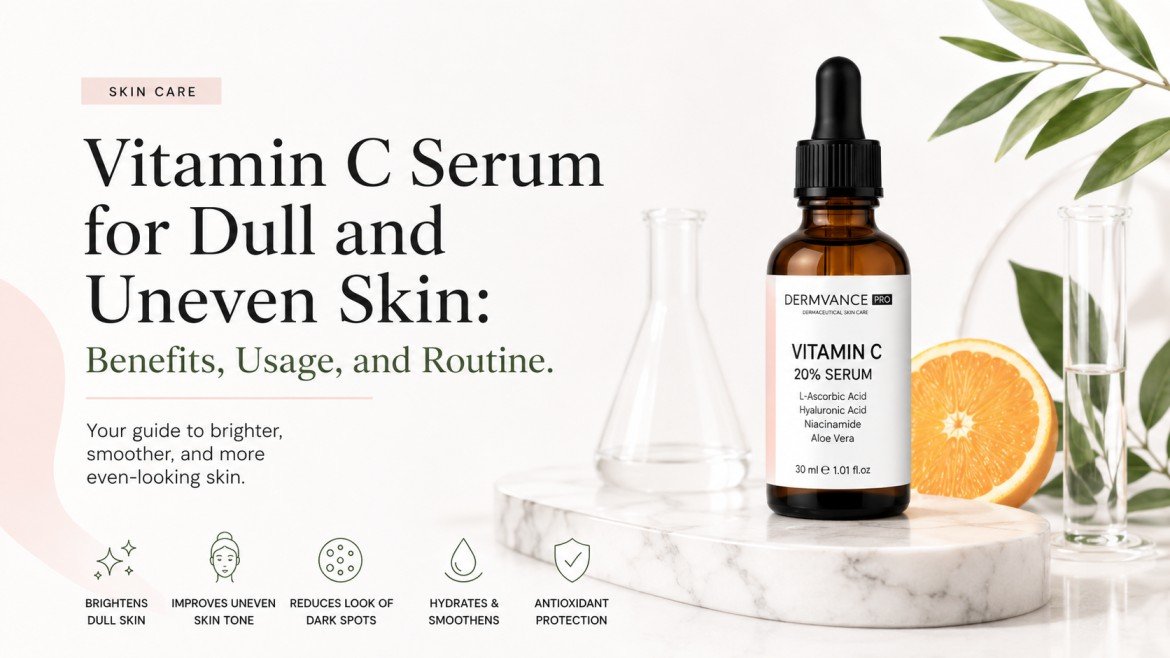
Dermvance Pro lists a Vitamin C 20% Serum under its Vitonomics skincare range.
The product includes:
- 20% Vitamin C positioning
- L-Ascorbic Acid
- Hyaluronic Acid
- Niacinamide
- Kojic Acid
- 30 ml packaging
- Brightening-focused care
- Hydration support
- Dark-spot appearance support
- Uneven-tone appearance support
This combination may suit users looking for a concentrated serum for dull skin and uneven tone.
Because it is a relatively active formula, users should review the complete label, follow usage directions, and introduce it carefully.
Explore the Vitamin C 20% Serum product page or browse all Dermvance Pro Skin Care products.
Frequently Asked Questions
Is Vitamin C serum good for dull skin?
Vitamin C serum may support a brighter, fresher, and more radiant-looking complexion when used consistently.
Can Vitamin C serum help uneven skin tone?
It may improve the appearance of uneven-looking tone and visible dark spots over time, especially when combined with daily sunscreen.
Is 20% Vitamin C serum suitable for beginners?
A 20% formula is relatively concentrated. Beginners and sensitive-skin users should introduce it carefully and follow the directions.
Can Vitamin C serum be used every day?
Daily use may be suitable depending on the formula and individual tolerance.
Should Vitamin C serum be used in the morning or at night?
Both may be suitable. Morning use complements sunscreen, while evening use may suit users who prefer fewer daytime layers.
Can Vitamin C and niacinamide be used together?
Yes. Many modern formulas contain both ingredients.
Can Vitamin C serum be used with Hyaluronic Acid?
Yes. The combination can support brightness and hydration.
Do I need sunscreen after applying Vitamin C serum?
Yes. Vitamin C does not replace broad-spectrum sunscreen.
How many drops of Vitamin C serum should I use?
Follow the amount stated on the product label.
Can men use Vitamin C serum?
Yes. Product choice should be based on skin concerns and tolerance rather than gender.
How should Vitamin C serum be stored?
Keep it tightly closed and store it according to the manufacturer’s directions, away from excessive heat and direct sunlight.
Where can I buy Dermvance Pro Vitamin C serum?
You can purchase it through the official Dermvance Pro website, the Vitonomics category, or the dedicated Vitamin C 20% Serum product page.
Conclusion
A Vitamin C serum can be a valuable addition to a routine for dull and uneven-looking skin.
It may support brightness, a more even-looking complexion, antioxidant care, hydration, and the visible appearance of dark spots. However, concentration and supporting ingredients matter.
A 20% L-Ascorbic Acid serum should be introduced carefully, particularly when the formula also contains ingredients such as Niacinamide and Kojic Acid.
Explore Dermvance Pro Vitamin C and brightening skincare products to build a simple routine for dull and uneven-looking skin.
For the best routine support, apply the serum correctly, use moisturizer according to your skin type, store the product properly, and apply broad-spectrum sunscreen every morning.

